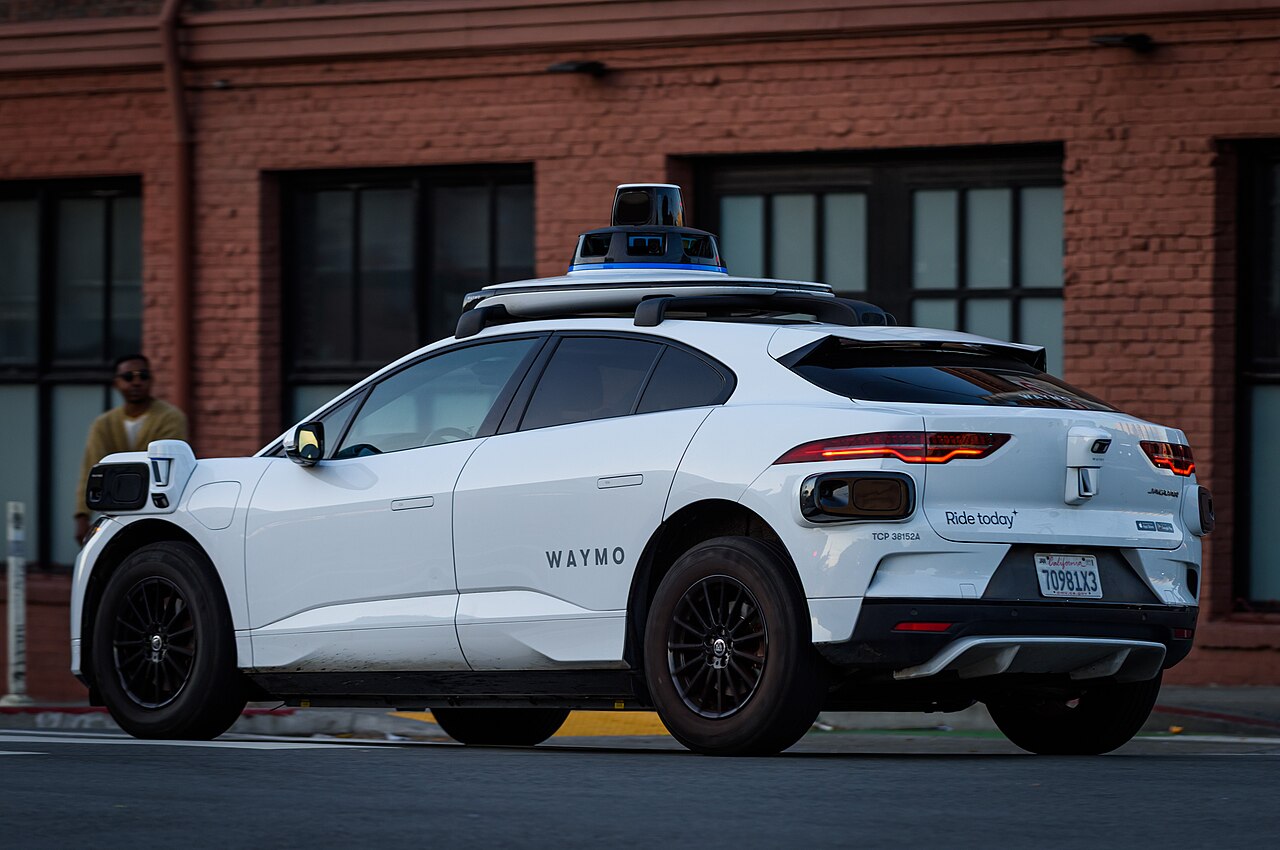
Waymo said on 17 September 2026 that it will bring its robotaxi service to Singapore, working with the country's Ministry of Transport and Land Transport Authority. Vehicles arrive within months. Paid rides do not start until 2028.
That two-year gap is the story. Everything else is context.
What Was Actually Announced
An all-electric Jaguar I-PACE fleet will land in Singapore in the coming months. Through 2027, those cars will be driven manually on local roads while the Waymo Driver is adapted to the city-state's road furniture, traffic conventions and signage. Only in 2028 does the service open to the public through the Waymo app.
This is Waymo's first Southeast Asian market. It follows a Japan announcement made days earlier, and sits alongside published roadmaps for Tokyo, London and Munich.
The numbers Waymo brings with it are no longer small: more than 20 million fully autonomous rides and over 300 million driverless kilometres, with the company claiming a 94% reduction in injury-causing crashes against a human-driver benchmark.
The Two-Year Runway Is the Product
Most robotaxi announcements in 2026 have been statements of ambition with no date attached. Lucid and Bolt put a 25,000-vehicle number on Europe last week with no investment figure, no vehicle order and no launch window. Waymo has done the opposite: a smaller claim, a firm date, and a publicly disclosed validation phase in between.
A two-year manual-driving runway is not caution dressed up as diligence. It is Waymo conceding that its driver does not generalise across cities for free.
That concession matters commercially. If the Waymo Driver transferred cleanly between markets, the marginal cost of a new city would be a fleet and a depot. It does not. Each market carries a localisation bill measured in years of supervised mileage before the first fare is collected.
The read-across for anyone modelling robotaxi economics: city count scales slower than capital. Waymo can raise money faster than it can raise cities.
Why Singapore, and Why It Is Not a Typical Market Entry
Singapore is the closest thing the industry has to a laboratory with a government attached.
- The state runs one of the world's most tightly managed transport systems, with vehicle ownership rationed by certificate and public transit treated as the spine of the network.
- Punggol has been designated a test bed for physical AI, giving autonomy developers a defined district rather than an open city.
- Transport Minister Jeffrey Siow framed the entry in terms of ecosystem and jobs, not disruption: "Waymo brings world-class technology and operational expertise, strengthening our ecosystem and creating new jobs."
Waymo's own framing matched it. Co-CEO Tekedra Mawakana positioned the service as complementary to transit rather than competitive with it — first and last mile, protection of pedestrians and cyclists, a feeder into the rail network.
That is not marketing gloss. In a market with roughly 70,000 taxi and private-hire drivers, the political economy of autonomy is the binding constraint, not the technology. Waymo is entering as an invited partner of the regulator, with the regulator setting the frame. Compare that with the US, where the company has spent years negotiating city by city, largely after the fact.
The trade is explicit: Waymo accepts a slower, state-sequenced rollout in exchange for regulatory cover it cannot buy anywhere else.
The Field Is Already Occupied
Waymo is not arriving to an empty road. WeRide and Pony.ai already operate autonomous shuttles in Singapore through partnerships with Grab and ComfortDelGro. Roughly 20 autonomous vehicles are already operating on Singapore's roads.
Those Chinese operators are in-market, in-partnership with the two dominant local demand aggregators, and will have two more years of Singapore-specific operating data before Waymo takes a single paying passenger.
So the competitive question is not whether Waymo's technology is better. On published safety data it very likely is. The question is whether a superior driver arriving in 2028 beats an adequate driver that owns the demand side from 2026.
Waymo's announcement did not name a local demand partner. In Japan it is working with GO and Nihon Kotsu. In Singapore, where Grab and ComfortDelGro are already spoken for, that omission is conspicuous.
What to Watch
Three things will tell you whether the 2028 date holds:
- Fleet arrival timing. "Coming months" is soft. A fleet on the ground before the end of 2026 keeps the 2027 validation year intact; slippage into mid-2027 pushes the launch.
- A named demand partner. Waymo can run its own app, but in a market of this size, app-only distribution against Grab is a hard start. A partnership announcement would be a significant signal.
- Scope of the 2028 launch. A Punggol-bounded service and a city-wide service are very different products sharing one launch date.
Why It Matters
For the wider industry, Singapore is a template being tested in public: autonomy deployed by invitation, on a government timetable, with the regulator as co-author rather than adversary.
If it works, it becomes the model every AV operator pitches to every mid-sized dense city that is nervous about an unsupervised rollout. If the 2028 date slips, it becomes evidence that even the most cooperative regulatory environment cannot compress the localisation problem — and that the constraint on robotaxi scale was never permission. It was the driver.