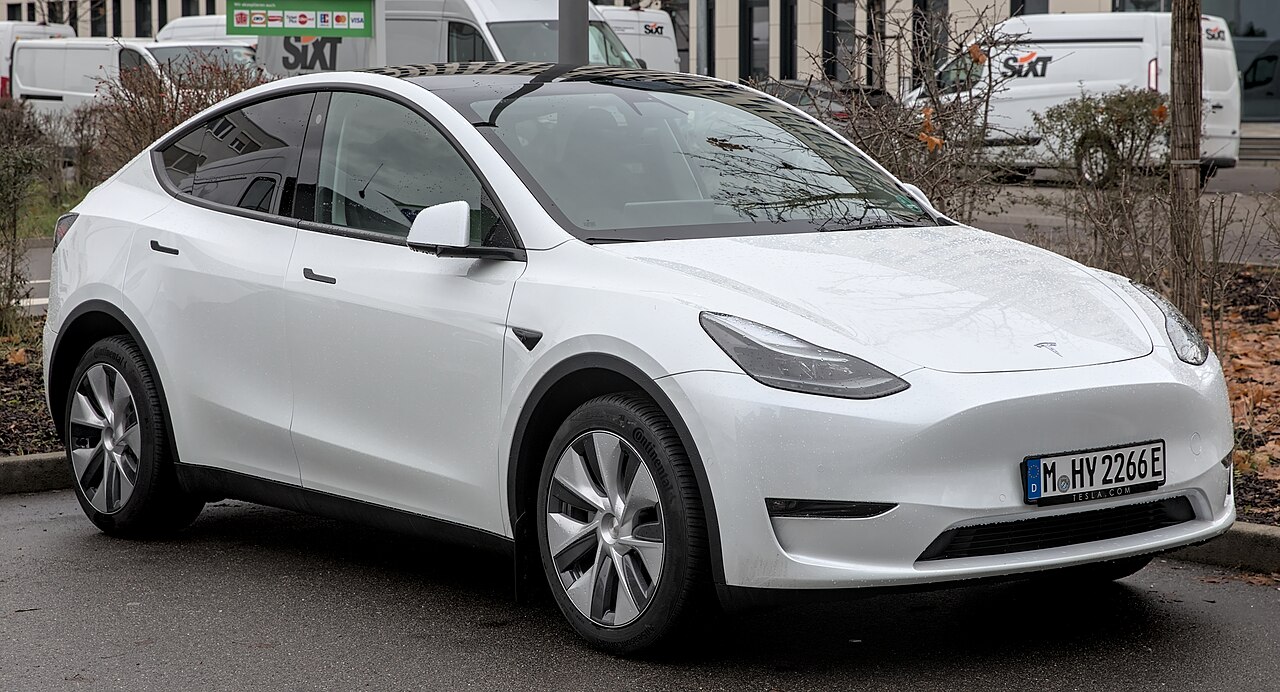
The Technical Committee on Motor Vehicles — the EU body that decides whether a national type-approval gets extended across all 27 member states — was expected to vote on 6 October on the Netherlands' application for EU-wide recognition of Tesla's FSD (Supervised).
The draft agenda for that meeting has now been published. The item gets 25 minutes, described as a continuation of discussion. There is no vote.
The committee does not reconvene until December. That is now the earliest possible date for an EU-wide decision.
The Arithmetic That Is Not Close
The reason this keeps slipping is not procedural. It is a counting problem, and the count is nowhere near.
EU-wide extension needs a qualified majority: at least 15 of 27 member states, representing at least 65% of the bloc's population.
Seven states currently recognise FSD (Supervised) nationally:
- Netherlands — the originating approval
- Denmark
- Belgium
- Estonia
- Lithuania
- Slovenia
- Czechia — added 22 September 2026
Together those seven are roughly 53 million people, or about 12% of the EU.
To clear 65% you effectively have to have Germany. Add France, Italy and Spain and you are close on both counts. None of those four has recognised the system. So the gap is not eight more member states — it is eight more member states including the ones that have been most explicit about not wanting to.
A qualified majority in the EU is a population test wearing a headcount costume. Seven small states get you 12%. One large one gets you 18%.
Why Article 39 Was the Route
The legal mechanism matters here, because it explains why this is a vote at all rather than a certification.
FSD (Supervised) does not fit the existing EU type-approval framework. So the Dutch regulator RDW used Article 39 of Regulation 2018/858 — the exemption provision written for technologies that regulation has not yet caught up with. RDW granted the approval on 10 April 2026, with validity provisionally limited to the Netherlands, and asked the Commission to extend it across the bloc.
Article 39 is a legitimate path and it has been used before. But it has a structural consequence: the decision moves from a technical assessment by one competent authority to a political vote among 27. Once that happens, every member state's own safety reservations, domestic politics, and view of Tesla become inputs.
The TCMV has now discussed the application twice without voting. A third discussion is scheduled. That pattern is what a committee looks like when the sponsor knows it does not have the numbers.
What the Objections Actually Are
The concerns on record are specific rather than atmospheric:
- Speed-limit compliance. The most concrete item. Sweden has asked for removal of the feature allowing the driver to override the speed limit. The Belgian non-profit Johanna.be published road-test findings on 24 September showing FSD exceeding the limit in 55% of tested 30 km/h zones, at an average of 44 km/h, and in 42% of 20 km/h residential streets.
- Driver-attentiveness monitoring. Whether the system's supervision requirement is enforced strictly enough to justify the "supervised" label.
- Winter road conditions. A live question for Nordic and Alpine states, and one that Dutch and Belgian testing does not answer.
- Urban traffic behaviour. France's stated ground for declining recognition.
Notice that none of these are objections to autonomy in principle. They are objections to this calibration — which is a harder problem for Tesla, because the remedy is software behaviour that the company has so far defended rather than changed.
What Changes Between Now and December
Three things could move the count, and it is worth being clear about which are plausible.
More small-state recognitions. Czechia's addition on 22 September shows the national route is still producing wins. But another five or six Estonias do not fix a 65% population test. This is motion without progress on the binding constraint.
A software change. If Tesla removed or hard-capped the speed-limit override for European vehicles, it would directly answer the most documented objection and the one Sweden has named. That is the single highest-leverage move available, and there is no indication it is planned.
A German decision. Germany alone is about 18% of the EU population and carries the weight of its own regulator's judgement with several other states. Nothing suggests this is imminent.
Our earlier report carried the 6 October vote date; that date no longer holds, and this piece corrects it.
For Tesla, the practical read is that the European regulatory path for FSD has moved from a question of when the vote happens to a question of whether the product changes before the vote can pass. December is a date on a calendar. The 65% threshold is the actual obstacle, and it has not moved.