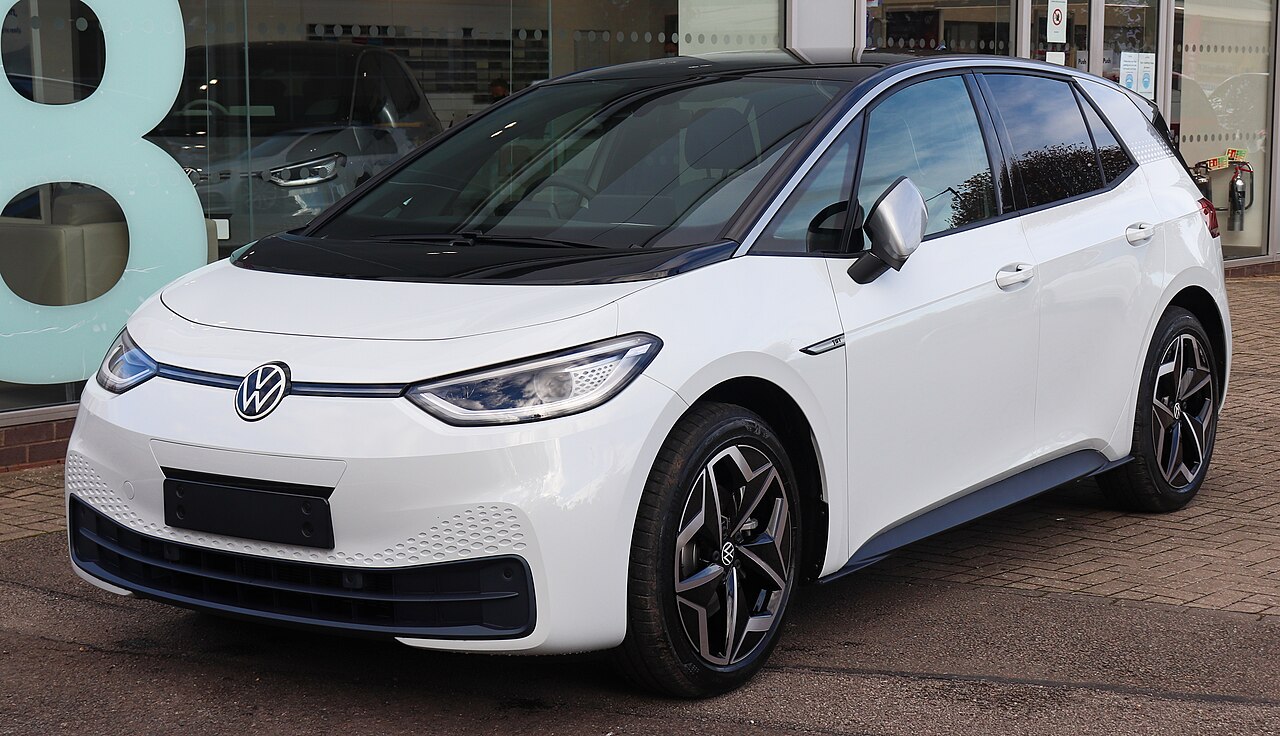
Volkswagen revealed the ID.3 GTI on 16 September 2026: 240 kW (326 PS), 545 Nm, rear-wheel drive, and up to 601 km of WLTP range. It is the most powerful GTI Volkswagen has built in the badge's fifty-year history.
It is also, by Volkswagen's own description, a near-production concept vehicle that is not yet available for sale. Pre-sales open in Europe in early 2027.
That gap between the reveal and the showroom is worth holding onto, because it shapes how the car should be read.
The Numbers
- 240 kW / 326 PS (322 hp) and 545 Nm from a single rear-mounted motor
- 0–100 km/h in 5.6 seconds with launch control, standard
- 200 km/h top speed, electronically limited
- 79 kWh lithium-ion battery, up to 601 km WLTP (373 miles)
- 183 kW DC peak charging, 10–80% in approximately 29 minutes
- DCC adaptive sports chassis; a dedicated GTI driving profile on a steering-wheel button
- Preliminary 14.5 kWh/100 km combined consumption, CO2 class A
The torque figure is the one that changes the character. 545 Nm in a car this size is not a hot-hatch number by combustion standards — it is roughly double what a Golf GTI's turbocharged four produces, delivered instantly and to the rear axle.
Rear-Wheel Drive Is the Actual News
Every GTI Volkswagen has built since 1976 has driven its front wheels. The ID.3 GTI drives its rear ones — not as a statement, but because the MEB platform puts the motor there and always has.
This is the quiet advantage electrification handed Volkswagen. Fifty years of GTI engineering has been, in large part, fifty years of managing torque steer, scrabbling inside front tyres and the compromise of asking two wheels to both steer and put down power. The platform simply removes that problem.
The most consequential thing about the ID.3 GTI is not that it is quick. It is that Volkswagen got to design a GTI without inheriting the front-drive compromise the badge was built around.
Whether it feels like a GTI is a separate question, and one that cannot be settled from a press release. The GTI identity was never primarily about output — it was about a specific kind of accessible, adjustable, slightly playful front-drive balance at real-world speeds. A 2.1-tonne-class rear-drive EV is a different instrument, however well-tuned.
The Cabin Is Unusually Committed
Volkswagen has resisted the temptation to make this a trim package:
- Tartan sport seats in the red-and-white-on-black GTI pattern
- A sports steering wheel with the red 12 o'clock marking
- 12.9-inch Innovision infotainment display
- 20-inch Wörthersee wheels — named for the GTI meeting on the Austrian lake
- A red light strip between the headlights; ambient lighting that turns red in GTI mode
- Optional panoramic roof and augmented-reality head-up display
The Wörthersee wheel name is a small thing that signals a large thing: Volkswagen is not treating the electric GTI as a clean break from the badge's culture. It is deliberately importing the iconography.
What to Watch
The concept caveat is doing real work. Volkswagen has labelled this a near-production concept with preliminary consumption figures. Power, range and charging numbers can move before pre-sales open in early 2027 — and on recent industry form, they more often move down than up.
Pricing is the unanswered question. Volkswagen has not disclosed it. A GTI badge has historically meant an accessible performance car; if the ID.3 GTI arrives priced against premium electric hatchbacks rather than against the Golf GTI, the badge is doing marketing work rather than describing a market position.
The sixteen-month gap invites competition. Announcing a car in September 2026 for early-2027 pre-sales gives rivals a long, clear look at the target. It also risks the car being judged twice — once on the concept, once on whatever actually reaches customers.
Range at this power is the genuine achievement. Volkswagen's own framing — that 240 kW and 601 km together show performance and range need not compete — is the most defensible claim in the release. A performance variant that gives up nothing in usable range is the thing hot-hatch buyers have been told for a decade they would have to sacrifice.
The plain version: Volkswagen has built a fast, long-legged, well-dressed electric hatchback and attached its most valuable badge to it. The engineering case is sound and the rear-drive layout is a real improvement rather than a marketing one. The open questions are price and timing — and both sit on the other side of a sixteen-month wait.