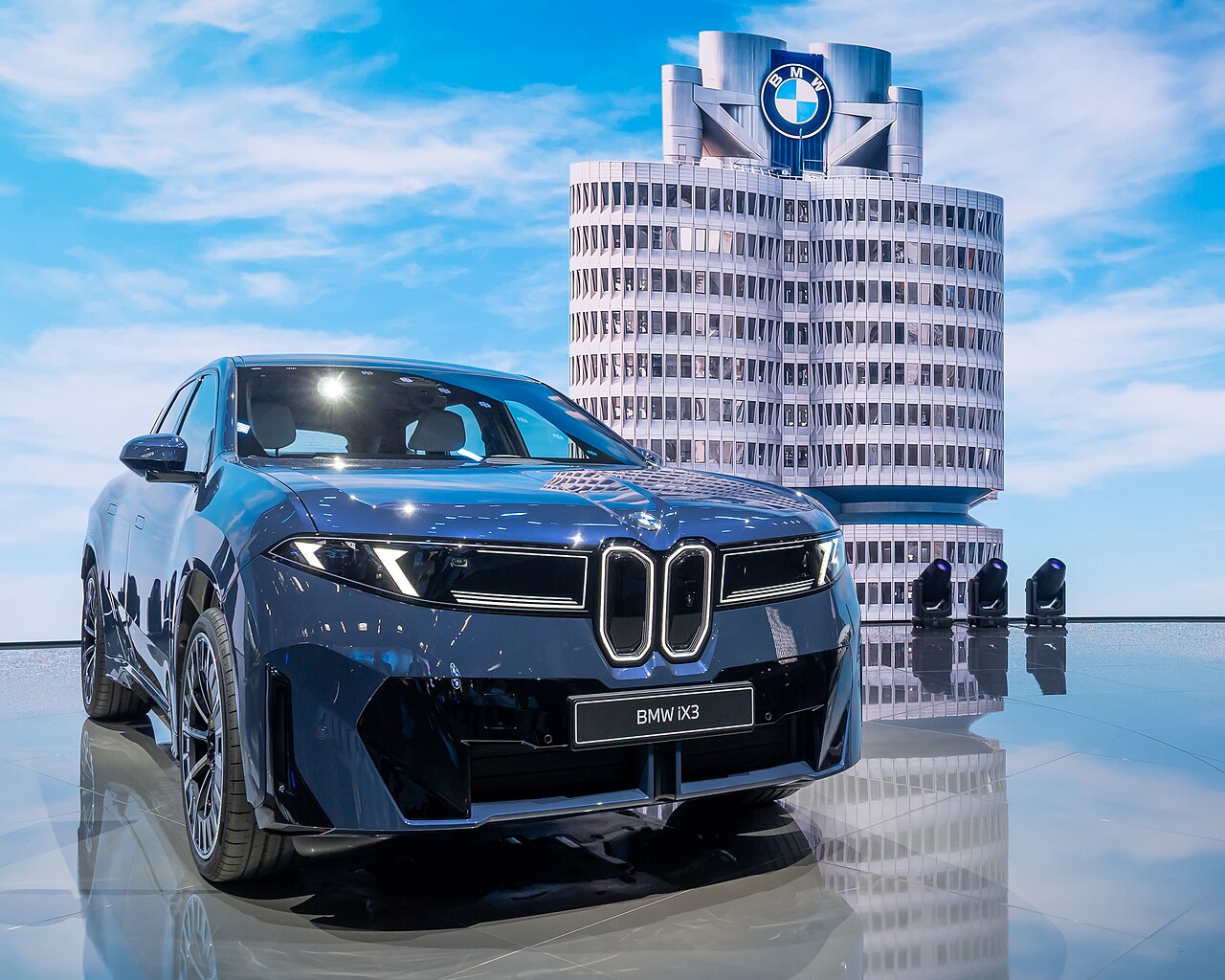
BMW confirmed on 15 September 2026 that the electric iX3 has taken 100,000 orders in Europe alone in the twelve months since its premiere — the strongest first year any BMW model has recorded, electric or combustion.
The number deserves to be read carefully, because the qualifier is the story. This is not a global figure padded by China. It is Europe only, in a market where almost every legacy manufacturer has spent the last eighteen months revising EV forecasts downward, cutting shifts, and quietly pushing electrification targets to the right.
Why This Breaks the Pattern
The prevailing narrative in European autos through 2026 has been retreat. Jaguar Land Rover cutting 4,000 jobs. Legacy manufacturers squeezed between Tesla on one side and Chinese entrants on the other. Plant consolidation across Germany and France. Against that backdrop, a single model taking six figures of orders in one region in one year is an outlier — and outliers are worth understanding rather than celebrating.
Three things separate the iX3 from the EVs that have struggled:
- It is not a science project. The iX3 is an X3 — BMW's highest-volume nameplate globally — offered electric. Buyers are not being asked to adopt a new body style, a new brand, or a new set of compromises. They are being asked to pick a powertrain.
- It sits inside an existing order book. Roughly half of all X3 orders in Europe are now for the electric version, according to BMW's own breakdown. That is conquest from within the model line, not from the general EV market.
- The supply side was ready. Series production at Debrecen, Hungary began in late October 2025 and had built 50,000 units by July 2026 — the fastest ramp in BMW Group history. Demand that outruns production becomes a cancellation problem. This one largely did not.
"100,000 orders within a year is a great start for the New Class, whose rollout is continuing to gain momentum," said Jochen Goller, BMW's board member for customer, brands and sales.
The One-Third Number Is the Real Signal
Buried in the wire coverage is a figure more useful than the headline: since its unveiling, the iX3 has accounted for roughly one-third of BMW's electric car orders in Europe.
That is a concentration risk and a validation at the same time.
The validation: BMW's Neue Klasse architecture — new 800-volt electrical system, new cell chemistry, new software stack — is not a lab demonstrator. It is shipping, at volume, and customers are choosing it over the combustion sibling parked next to it in the showroom.
The risk: one model carrying a third of a manufacturer's regional EV demand means the portfolio behind it is not yet pulling its weight. BMW delivered around 336,000 battery-electric vehicles globally last year. A single nameplate doing this much of the European work tells you the iX3 is succeeding and that the i4, i5 and iX are not succeeding at the same rate.
The answer to that is the pipeline: an iX4 is planned for the Hungarian plant, and Mexican production of the iX3 is slated to begin in the second half of 2027 — the latter a signal that BMW expects the North American order book to eventually justify local build, tariffs and IRA politics notwithstanding.
What It Means for the European Market Read
For anyone tracking European EV demand as a single number, this is a useful correction. Demand is not collapsing. It is consolidating.
The European buyer in 2026 is not rejecting electric powertrains. They are rejecting electric products that ask them to give something up — interior space, towing, residual value, dealer familiarity, brand continuity. The iX3 asks them to give up very little, and it is being rewarded for that with an order book that no bespoke EV in the segment has matched.
That has an uncomfortable implication for the manufacturers who bet on standalone electric sub-brands and dedicated EV silhouettes. The evidence from this order book is that the winning EV strategy in Europe right now looks less like reinvention and more like substitution — take the model people already buy, and electrify it properly.
What to Watch Next
- Order-to-delivery conversion. An order is not a registration. The number that will actually matter is how many of these 100,000 convert to deliveries over the next two quarters, and what the cancellation rate looks like once incentives shift.
- Whether the mix holds. Fifty percent electric within the X3 family is remarkable. If that number is still near 50% in twelve months' time, it is a structural shift. If it drifts to 35%, it was an early-adopter surge.
- Whether Neue Klasse scales. The iX3 is the first of the platform. The 3 Series-equivalent sedan is the volume test. One successful launch is a product win; two is a platform win.
- North America. The Mexico decision in H2 2027 is BMW betting that this demand profile eventually travels. On current US EV data, that is a bet, not a forecast.
The honest summary: BMW has produced the clearest evidence yet that European EV demand responds to good products more than to policy, and it has done it in a year when almost everyone else in the region was explaining why that wasn't possible.