Bentley revealed the Torcal on 23 September 2026, and the headline number is the one the company will be asked about for the next decade: 888 PS — 876 hp, 653 kW — making Bentley's first electric car also the most powerful production vehicle in its 107-year history.
The more interesting number is the one Bentley chose not to chase.
The Two Cars
The Torcal arrives as Bentley's fourth model line, built at Crewe, in two states of tune.
- Torcal — 821 PS (810 hp / 604 kW) and 1,194 Nm (881 lb-ft); 0-60 mph in 3.3 seconds; 155 mph
- Torcal S — 888 PS (876 hp / 653 kW) and 1,350 Nm (996 lb-ft) with Launch Control engaged; 0-60 mph in 2.8 seconds; 162 mph
Both use twin permanent-magnet synchronous motors, one per axle, with a locking rear differential, fully active suspension and all-wheel steering. The car is five metres long with a 460-litre boot, a 90-litre frunk and an 11.1-metre turning circle — a genuinely relevant figure in a vehicle this size.
The battery is 113 kWh usable on an 800-volt architecture, built from 192 lithium-ion pouch cells, rated at up to 375 miles (600 km) WLTP. It charges at 400 kW peak, taking 10-80% in under 20 minutes and adding roughly 100 miles in seven minutes. Bentley covers it for 10 years or 100,000 miles.
On specification alone, this is a competitive luxury EV rather than a remarkable one. Several cars already charge faster in percentage terms and one or two go further. What makes the Torcal worth reading closely is the engineering decision buried underneath the numbers.
Bentley Stopped Short On Purpose
Here is the detail that reframes the whole car. Bentley had the electrical and mechanical headroom to go quicker than 2.8 seconds, and declined to use it — on the stated grounds that its customers would not enjoy the result.
A 2.8-second 0-60 mph time in a five-metre luxury SUV is not a limit Bentley ran into. It is a ceiling Bentley installed.
That is close to the opposite of how the electric performance market has behaved for five years. The default move for a brand launching its first EV has been to lead with a number that embarrasses its own combustion flagship, because acceleration is the one metric electric powertrains deliver almost free. Bentley had that card and put it face down.
The logic is defensible, and it is commercial rather than sentimental. Bentley's buyers do not cross-shop on the drag strip. They cross-shop on ride quality, isolation, rear-seat experience and how the car behaves at seven-tenths on a bad road — all things that a chassis tuned for a 2.4-second launch actively degrades. Spending the available headroom on active suspension and rear-wheel steering instead of on a tenth of a second is a coherent reading of who actually signs the cheque.
What Bentley Is Really Solving For
Crewe's problem has never been power. It has been relevance under emissions regulation while selling a few thousand hand-finished cars a year at very high margin — a volume too small to absorb compliance costs on its own and too profitable to abandon.
The Torcal addresses that in three specific ways:
- It is a new model line, not a conversion. Bentley is adding an electric nameplate alongside Continental, Flying Spur and Bentayga rather than electrifying one of them and risking the residuals of an existing franchise.
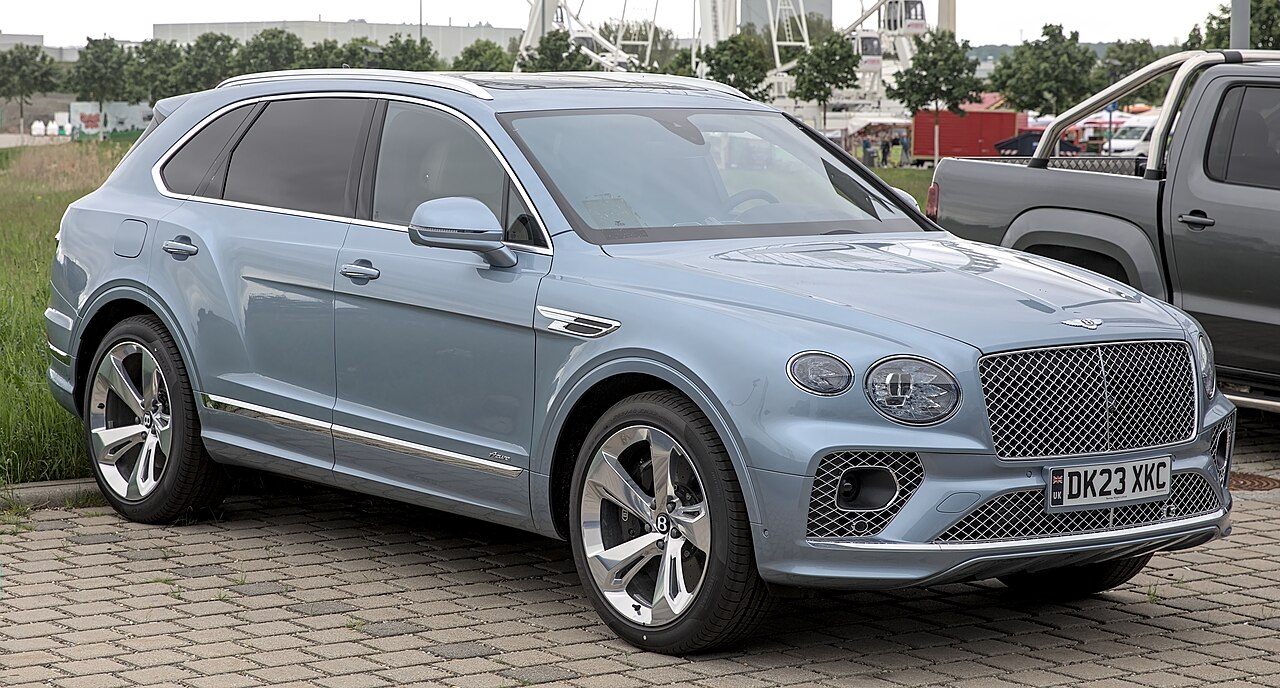
- It is an SUV. The Bentayga is Bentley's volume and profit engine. The Torcal is aimed at the same buyer with a different powertrain, which is the lowest-risk way to move electric volume through an established dealer network.
- It is built at Crewe. Keeping assembly in Cheshire protects the hand-finishing story that justifies the price, and keeps the plant loaded as combustion volume eventually declines.
There is also a platform argument. Pre-reveal reporting placed the Torcal on architecture closely related to the Porsche Cayenne Electric — unsurprising inside the Volkswagen Group, and the mechanism by which a 10,000-unit-a-year brand can afford an 800-volt, 400 kW electric SUV at all. Bentley has not made platform sharing a talking point, which is itself the correct call.
The Gaps
Two things Bentley did not announce, and both matter more than the power figure.
- Price. Unstated. In a segment where the options list does much of the commercial work, the Torcal's positioning relative to its own combustion sibling is the entire question.
- On-sale date and first deliveries. Also unstated. Bentley's first EV has already slipped once from an earlier target; a reveal without a delivery window is a reveal, not a launch.
Why It Matters
The Torcal is a useful marker for where luxury electrification has actually landed. The first wave of premium EVs competed on the metrics electricity wins easily — acceleration, quietness, screen area. Bentley has launched into a more mature market and chosen to compete on the things that were hard before and are still hard now: suspension control, steering, packaging, and the judgement to leave performance on the table.
That is a more confident product decision than a 2.4-second launch would have been. Whether it is the right one depends entirely on the two numbers Bentley has not yet published.
What to Watch
- The price, and the gap to Bentayga. Priced above it, the Torcal is a halo. Priced alongside it, it is a replacement strategy.
- Whether the 375-mile WLTP figure survives contact with EPA testing. The US is Bentley's largest single market and EPA cycles are considerably less generous.
- Whether the restraint holds. A Torcal Speed or Supersports with the headroom unlocked would tell you the discipline was marketing rather than engineering conviction.