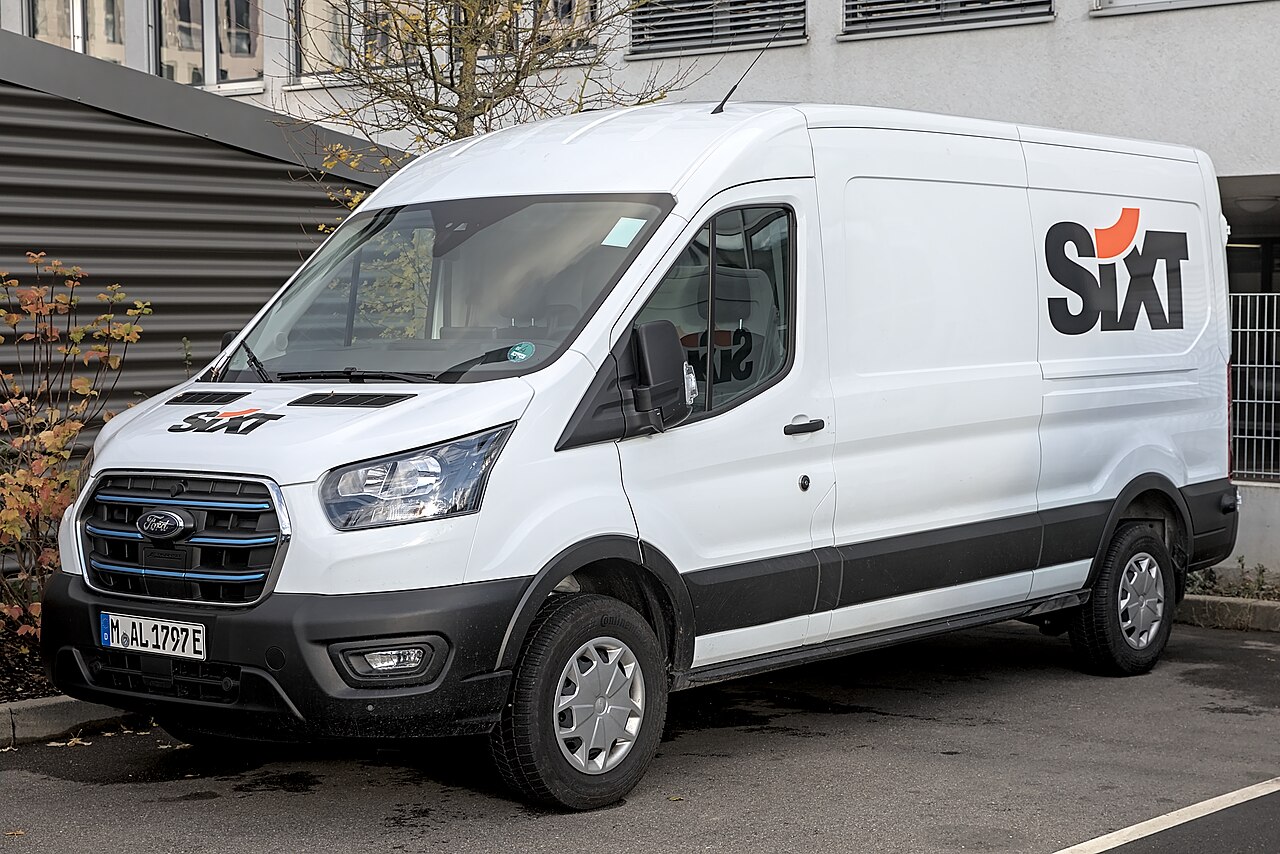
Ford's UK configurator opened on 25 September for the Transit City, and the number at the top of it is £29,421 excluding VAT for the L1H1 panel van. The taller, longer L2H2 asks £31,921. Before the £5,000 Plug-in Vehicle Grant.
It is the cheapest electric van Ford sells in Europe. It is also built 6,000 miles from Dagenham, at Jiangling Motors Corporation's plant in Nanchang, China.
The Specification Is Deliberately Unambitious
Read the numbers as a brief rather than a spec sheet and the product makes immediate sense:
- 56 kWh lithium-iron-phosphate battery — cheap chemistry, long cycle life, no nickel or cobalt exposure
- 110 kW (148 bhp) and 260 Nm — one motor, no variants
- 158 miles WLTP in L1H1 form; 139 miles in L2H2
- 75 mph top speed, 13.7 seconds to 62 mph
- 12-metre turning circle
- 87 kW DC peak, 10-80% in around 30-33 minutes; 11 kW three-phase AC as standard
Nothing there is class-leading and nothing is meant to be. A van that tops out at 75 mph is a van that has been told it will not be doing motorways. A 158-mile battery is a van that returns to the same depot every night.
Where Ford did not economise is the part fleets actually buy:
- 1,085 kg payload (L1H1), 1,275 kg (L2H2), 1,600 kg on the L2 chassis cab
- 6.4 m³ and 8.5 m³ load volumes, with a three-metre load length in L2
- Three Euro pallets in the short van
- Eight years / 100,000 miles on the electrical components
A 148 bhp van with a 75 mph ceiling and 1,275 kg of payload is not an underspecified product. It is a correctly specified one, for a customer who was never going to use the rest.
LFP Is the Whole Business Case
The sub-£30,000 headline is not a subsidy or a launch offer — it is chemistry plus geography. LFP cells are materially cheaper per kWh than the nickel-rich packs in Ford's European-built electric vans, and they tolerate the daily 100% charging that depot operations impose. Building the vehicle at JMC — Ford's long-standing Chinese joint-venture partner — removes the rest of the cost.
Crucially, the Transit City sits on a platform not shared with any other European Ford. This is not a Transit Custom with a smaller battery. It is a separate, purpose-built, low-cost architecture that Ford chose to source rather than engineer in Europe.
That decision was made openly. When Automotive News Europe covered the reveal in March, the framing was already "cut-price, China-built." Ford has not tried to obscure the origin; the first European-market units came off the Nanchang line in late August 2026, and the configurator followed four weeks later.
Why This One Matters More Than Its Price
Two things are happening at once, and the second is the story.
The obvious one: Ford now has an answer to the Chinese-built electric LCVs that have been taking European van share — and the answer is to buy from the same place. A £29,421 ex-VAT entry price with a £5,000 grant on top puts the total cost of ownership case within reach of operators who have spent three years concluding that electric vans did not pencil.
The less obvious one: this is a legacy European nameplate on a Chinese-sourced product, sold through Ford's own channel, at a price Ford's European plants cannot match. It is the same logic that Stellantis and Renault have been resisting publicly and testing quietly. Ford has simply stopped resisting.
There is a counter-case, and it is not trivial. A China-built van is exposed to exactly the trade instruments Brussels has been reaching for — the EU's EV tariff regime, the hybrid export dispute with Beijing, and any future extension to commercial vehicles. Ford has put the price competitiveness of a volume European product downstream of a tariff line it does not control. A single policy change re-prices the entire proposition.
Why it matters for anyone running a fleet: the barrier to electrifying urban last-mile has been capital cost, not capability, and the capability on offer here was always sufficient. At £29,421 before grant, with 1,275 kg of payload and eight years of battery cover, the arithmetic changes. Whether it stays changed depends less on Ford than on what the European Commission does next.