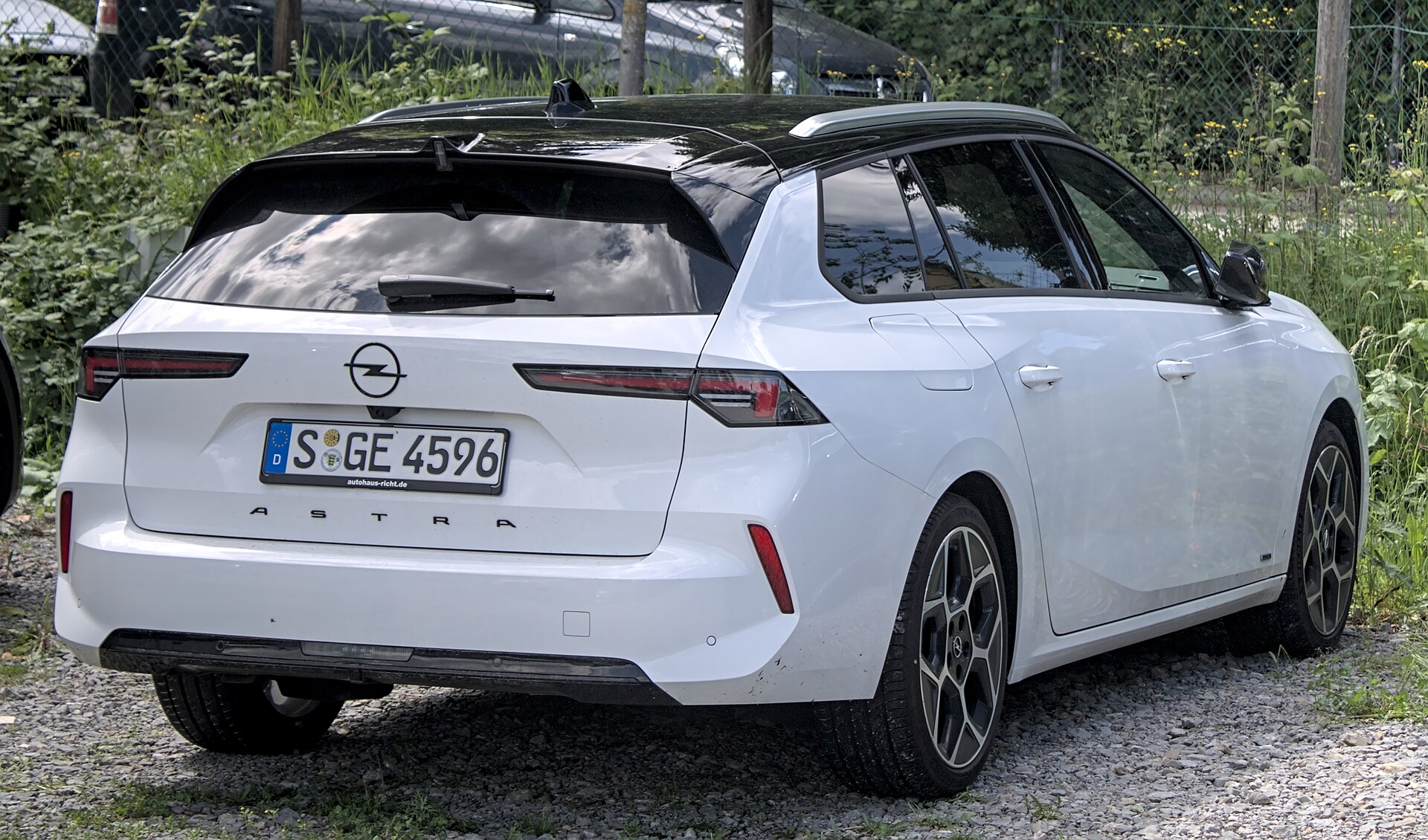
Opel has announced the STX Concept, an electric estate design study with moving aerodynamic elements and a new interpretation of its front lighting. The company’s October 11 release presents it as a direction for future models, rather than a car with an announced retail price and delivery schedule.
Stellantis says the STX was among six concepts shown at its October 11 Hangar Y event, held ahead of the Paris Motor Show. This report draws on those company statements; Passion4Drive did not attend the presentation.
What Opel has described
STX stands for Sports Tourer eXperimental. Opel describes an all-wheel-drive electric architecture, cameras in place of conventional exterior mirrors and active rear aerodynamic components, including extendable diffusers. The lighting develops the brand’s Vizor face and Compass motif.
The announcement discusses wheels and tyres as part of the aerodynamic package and says features of the study will appear in future Opel models. It does not establish that every concept detail will reach production together, or under the STX name.
One detail is worth separating from the STX specifications: the WLTP energy-consumption figures printed near the top of Opel’s release are explicitly for the Corsa GSE. They should not be reported as the estate concept’s consumption or used to calculate its range.
What would demonstrate the benefit?
Our assessment is that the useful next evidence would be a measured comparison. A moving aerodynamic device is a design feature; a quantified improvement needs a baseline, a stated speed and test conditions. Without those, we cannot convert the announcement into extra kilometres of usable range.
For a prospective estate buyer, cargo measurements would be just as helpful as the exterior design. A loading demonstration with the rear seats in place, the height of the load lip and the usable shape around the wheel arches would answer different questions from a photograph of the roofline. Those are examples of evidence to request, not measurements available from this report.
A design signal, with purchase questions still open
The distinction between a concept and a product matters beyond Europe. Buyers would need local availability, equipment, warranty terms and a complete price before comparing an eventual model with alternatives. We have not inferred an Indian or US launch from its Paris appearance.
For now, the announcement offers a specific view of Opel’s estate-design intentions. It cannot settle ride quality, real-world efficiency or ownership costs. Those require a production vehicle and suitable testing.
Explore our EV and charging coverage for electric-car context, or our buying guides when comparing vehicles already on sale.