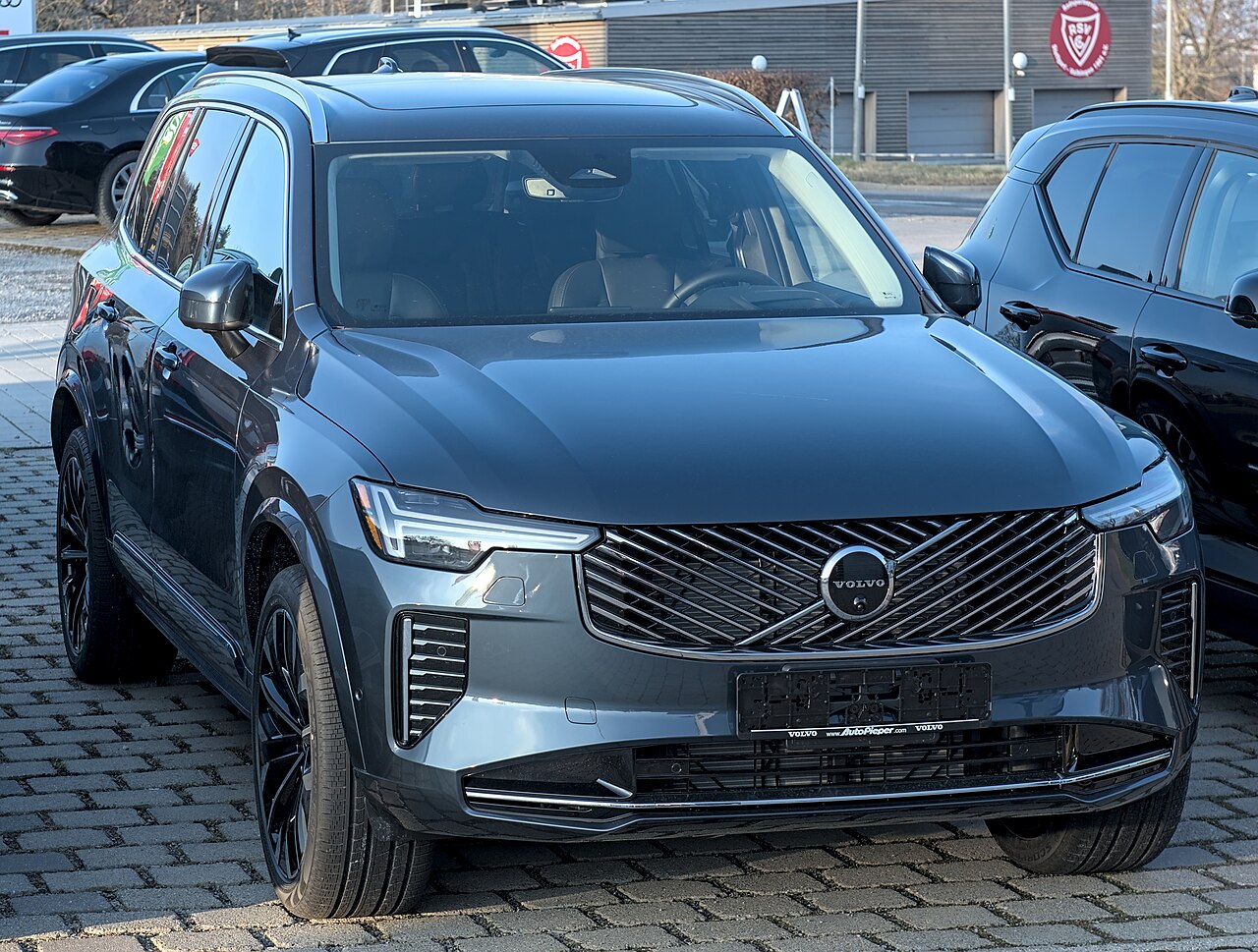
Volvo Cars announced on 20 September 2026 that Klaus Zellmer, currently Chairman and CEO of Škoda Auto, will become its President and CEO — effective no later than 1 October 2027.
Read that date again. The announcement is more than twelve months ahead of the handover. Håkan Samuelsson, 75, steps down in spring 2027, meaning there is a stretch of the calendar in which Volvo has a named successor, a departing incumbent, and a product offensive that does not pause for either.
What Was Announced
The facts are straightforward; the timeline is not.
- Klaus Zellmer becomes President and CEO of Volvo Cars, effective no later than 1 October 2027
- He arrives from Škoda Auto, the Volkswagen Group's high-volume Czech brand, where he is Chairman and CEO
- He has over 30 years in the industry, including CEO roles at Porsche in both Germany and North America — he ran Porsche Cars North America from 2015 to 2020 — and a Volkswagen Passenger Cars board role covering marketing, sales and after-sales
- Håkan Samuelsson departs in spring 2027, closing a second tenure at the company; he was brought back in 2025 on a publicly stated two-year term
- Chairman Eric Li framed the choice around Zellmer's experience spanning "both the high-end premium segment and high-volume brands"
That last phrase is the whole rationale compressed into a clause, and it is worth unpacking.
Premium Brand, Volume Economics
Volvo's structural problem is that it prices and positions as a premium marque but increasingly needs the cost base of a volume one.
The company reported a 3.5% EBIT margin for 2025 and has told investors it intends to exceed 8%. Getting from one to the other is not a marketing exercise. It runs through parts commonality with Geely, plant consolidation, and a product plan — 13 all-new models by the end of 2030, split seven for Western markets and six for China — that was laid out in Stockholm only three days before this appointment was announced.
Zellmer's CV maps onto that problem with unusual precision. Porsche taught him how premium pricing power is built and defended. Škoda taught him how a brand earns margin on volume inside a group that shares platforms across a dozen nameplates.
Volvo did not hire a premium executive or a volume executive. It hired someone who has run both, because the strategy requires the company to be both at once.
The Twelve-Month Gap Is the Real Signal
Announcing a CEO a year ahead of arrival is unusual, and it is not free.
The obvious explanation is contractual: Zellmer is a sitting CEO inside the Volkswagen Group, and releasing him takes notice periods and an orderly succession at Škoda. Volvo has chosen to announce the destination rather than wait for the clearance.
That choice carries three consequences worth tracking:
- Authority drains early. A named successor changes how an organisation reads its current chief executive. Samuelsson will spend his final months executing a strategy his replacement did not write and will inherit whole.
- Continuity is being purchased deliberately. Volvo has just committed to a thirteen-model programme, a five-plant manufacturing reorganisation and an eight-percent margin target. Announcing the successor now tells investors that nobody is waiting for a leadership answer before funding any of it.
- The strategy is fixed before the strategist arrives. Zellmer is inheriting a plan, not writing one. His first meaningful decision will be what he chooses not to change.
Samuelsson's own position is worth noting plainly. He was brought back in 2025, at 73, on a two-year term that was stated openly at the time. This is a scheduled ending, not a defenestration — which makes the long runway easier to read as planning rather than crisis.
What He Inherits
The in-tray is specific, and none of it is new.
- US tariffs, which have hit a European manufacturer selling into North America without the domestic footprint to absorb them
- An ageing portfolio, which the 13-model plan is designed to fix but which will not be fixed for several years
- Low capacity utilisation, addressed in part by the 17 September reorganisation around five dedicated plants and two shared sites
- Elevated raw-material costs, at a moment when the shift toward hybrids changes the bill of materials again
- A majority shareholder in Geely whose parts-commonality roadmap — from roughly 10% today to around 30% by 2030 — is simultaneously Volvo's largest cost lever and its sharpest question about brand distinctiveness
The Question Nobody Has Answered Yet
Volvo has spent 2026 doing the difficult, correct things: abandoning the all-electric-by-2030 framing for a two-track powertrain strategy, reorganising manufacturing, regionalising the product plan, and setting a margin target that requires structural change rather than cost discipline alone.
What it has not yet demonstrated is that a premium brand can absorb that much Geely Group commonality and still command a premium price. That is the tension Zellmer inherits, and it is the one his Škoda experience speaks to most directly — Škoda's entire commercial achievement has been extracting healthy margin from shared Volkswagen architecture while retaining a distinct identity.
Whether the same trick works upmarket, where buyers are paying for differentiation rather than value, is the open question of his tenure. He has a year to think about it before he can do anything.