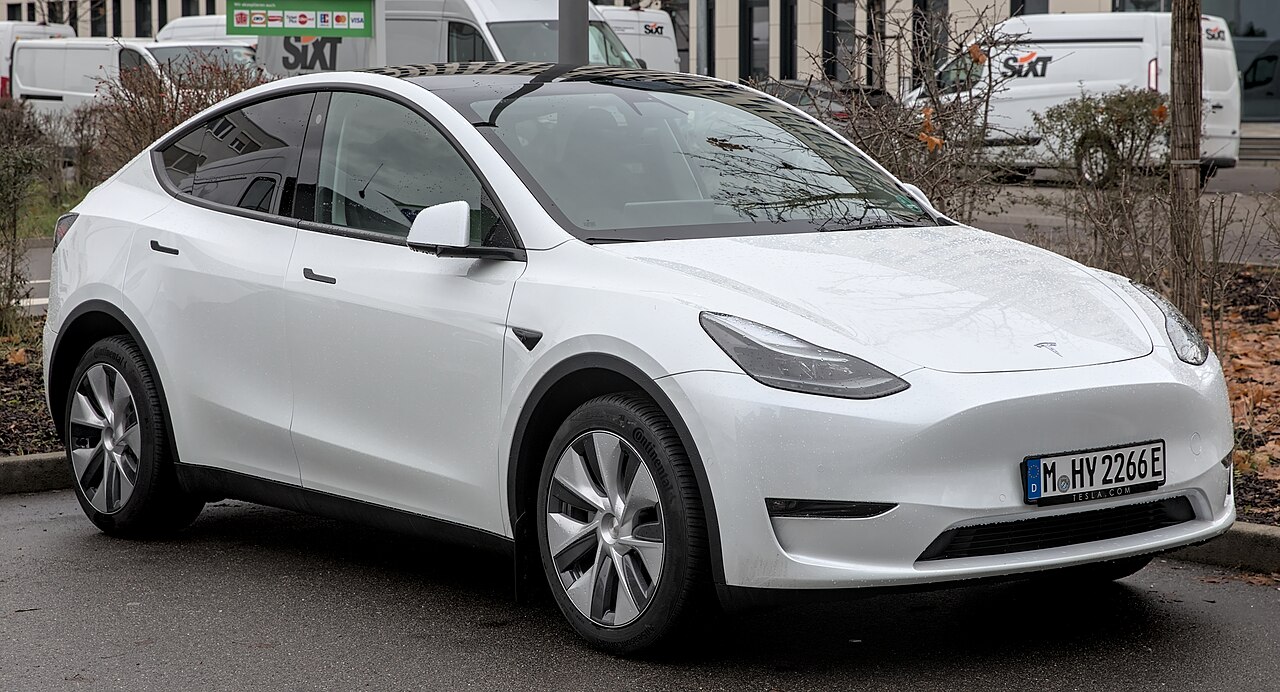
A Brussels road-safety non-profit put Tesla's Supervised Full Self-Driving on the city's slowest streets for three days in July, drove roughly 400 kilometres, and published the result on 24 September 2026: in 55% of the 30 km/h zones it tested, the car broke the limit. Where it did, it averaged 44 km/h.
The organisation is Johanna.be, and it named the study FSD30. The finding that matters is not the speeding itself — it is why the car sped.
The Car Did Not Ignore the Limit. It Got It Wrong.
In a majority of the 30 km/h zones tested, the system displayed 50 km/h on the instrument cluster. It was not overriding a limit it understood. It had read the street wrong and then drove confidently to the wrong number.
That distinction changes what kind of problem this is. A system that knows the limit and exceeds it by a margin is a tuning decision — arguably a deliberate one, and one a software update can reverse in a week. A system that misclassifies the road itself has a perception problem, and perception problems do not close on a release schedule.
The pattern held on Brussels' slowest street type as well:
- 55% of tested 30 km/h zones — limit exceeded
- 42% of tested woonerven (20 km/h residential shared-use streets) — limit exceeded
- 44 km/h average where the posted limit was 30
- ~400 km covered across three days in July 2026
A pedestrian struck at 44 km/h is nearly six times more likely to die than one struck at 30 km/h.
That ratio comes from WHO injury data, and it is the reason Brussels moved to a city-wide 30 km/h default in the first place. The zones Johanna.be chose to test are precisely the ones where the gap between 30 and 44 stops being a traffic-code abstraction.
Why the Timing Is the Story
Johanna.be sent its findings to the authorities on 7 September 2026. It published them on 24 September. The Technical Committee on Motor Vehicles (TCMV) votes on EU-wide approval of the system on 6 October — eleven days after publication.
That sequencing is not incidental. It is advocacy, and it should be read as such. But the vote it is aimed at is real, and so is the threshold: a qualified majority of at least 15 member states representing 65% of the EU population.
Here is the regulatory position the vote would consolidate:
- Netherlands — the RDW approved the system in April 2026
- Belgium — approved 10 June 2026, via the Flemish transport ministry
- Sweden — has publicly raised concerns about excessive speeding
- European Transport Safety Council — had already flagged compliance concerns before this study
So the system is already legal in at least two member states, on national approvals, and the October vote is about generalising that across twenty-seven. A study showing a majority-of-tests failure rate on urban speed compliance, landing eleven days before that ballot, is aimed at the handful of states whose votes decide whether 65% is reached.
Tesla's Counter-Position
Tesla did not respond to Reuters on the Johanna.be findings, and the RDW declined to comment. But Tesla has published its own data, and its claim is specific: FSD-enabled cars do not speed excessively and drive at speeds matching surrounding traffic.
Read the two claims side by side and they are not actually in contradiction. They are measuring different things.
- Tesla's benchmark is surrounding traffic. On that measure, matching the flow is the safe behaviour, and a car doing 44 in a 30 zone where everyone else does 44 scores well.
- Johanna.be's benchmark is the posted limit. On that measure, the same car fails.
A city that has legislated 30 km/h has, by definition, decided that prevailing traffic speed is the thing it wants to change. A driver-assistance system calibrated to prevailing flow will always lag that legislation — and in a shared-use street rated at 20 km/h, "matching traffic" is close to meaningless, because on a woonerf the pedestrian is the traffic.
This is the real regulatory question the TCMV is being handed, and it is not "is FSD safe." It is whose speed reference the type approval encodes — the sign, or the surrounding cars.
What Is Actually Unresolved
Three things are worth holding loosely, and we will flag them plainly.
Sample size and methodology. Three days and 400 km, run by an advocacy group with a declared position, is a signal — not an audit. It is not a controlled regulatory test programme, and it has not been independently replicated. The percentages should be read as "this happened repeatedly in a real city" rather than as a certified failure rate.
Software version drift. FSD builds change monthly. A July result describes the build that was on the car in July. Neither Tesla nor the study has published a version-level comparison, so whether the current build behaves the same in the same streets is genuinely unknown.
What approval would actually mandate. Both the RDW and the Belgian authorities have been explicit that driver responsibility remains with the driver. A type approval for a supervised system is not a declaration that the system is correct — it is a declaration that a supervising human is legally accountable for its errors. That is a defensible legal architecture, and also the thing that makes a speed-sign misread easy to wave through: the driver was supposed to catch it.
Why It Matters
The interesting part is not whether Brussels is right about Tesla. It is that Europe has begun evaluating autonomy against municipal policy rather than against highway safety statistics.
Every prior fight over driver assistance in Europe was framed in motorway terms — lane keeping, phantom braking, hands-off time. This one is framed in terms of a 30 km/h zone and a residential shared street. Those are the environments where cities have the most regulatory agency and the least tolerance for a 14 km/h error.
For any manufacturer shipping a supervised system into Europe, the lesson is narrower than "regulators are hostile." It is that sign recognition has become a compliance surface, not a convenience feature — and that a system tuned to drive like the traffic around it is now exposed in every city that has decided the traffic around it is the problem.
The TCMV votes on 6 October.