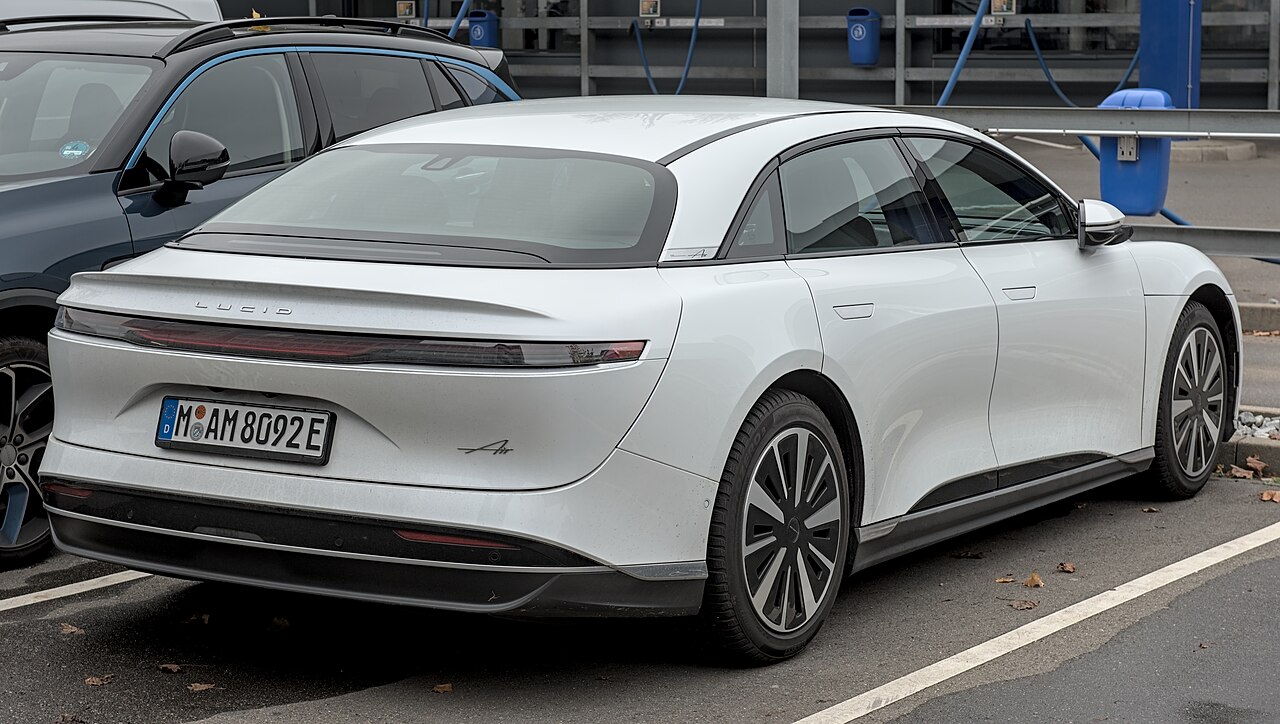
Lucid and Bolt announced on 17 September 2026 that they intend to put at least 25,000 autonomous electric vehicles on European roads, built on Lucid's Midsize platform and running NVIDIA's Hyperion compute and sensor architecture at SAE Level 4.
It is the largest robotaxi number anyone has attached to Europe. It is also, read carefully, a statement of intent rather than a transaction.
What Was Actually Agreed
No money changed hands. No vehicles were ordered. No deployment date was given.
Bolt's autonomous division will own vehicle definition, software, safety requirements, fleet infrastructure and operations. Lucid — through a newly created Lucid Technologies unit consolidating its AI, driver assistance and autonomy work — supplies the vehicle. The autonomous driving software provider was not named.
That last omission matters more than the headline number. In this partnership, Lucid is the hardware.
Lucid builds the car and the platform. Bolt runs the fleet. NVIDIA supplies the compute. The thing that actually makes the vehicle drive itself has not yet been assigned to anyone in public.
The Platform Problem
The 25,000 vehicles are to be built on Lucid's Midsize platform, which does not yet exist in production form. Lucid pushed its Midsize launch to the second half of 2027 — a delay confirmed roughly six weeks before this announcement.
So the sequence is: a vehicle architecture arriving in late 2027 at the earliest, carrying an unnamed Level 4 software stack, deployed into a European regulatory environment that has not yet issued the permits such a fleet would require.
None of that makes the partnership meaningless. It does mean the meaningful dates are not in this press release.
Why Bolt Is Doing This
Bolt is Europe's largest ride-hailing platform: 200 million-plus customers, 4.5 million drivers, 850-plus cities, 50-plus countries. Its stated ambition is 100,000 autonomous vehicles on its platform by 2035.
The Lucid agreement is not Bolt's first move toward that number. It is at least its third:
- Stellantis — an announced partnership around AV-ready platforms including the eK0 van architecture and the broader STLA family, with pilot operations targeted from 2026 and larger rollout from 2029. Also not legally binding; permits, technical standards and contractual detail remain open.
- Pony.ai — a parallel initiative targeting European city deployments.
- NVIDIA — the compute and AI layer underneath the whole programme.
Read as a set, the strategy is coherent and fairly ruthless. Bolt is not betting on one manufacturer's autonomy timeline. It is acquiring optionality across several of them, at effectively zero capital cost, and letting the OEMs compete to be the one that actually ships.
For Bolt, three non-binding partnerships are not indecision. They are a hedge.
Why Lucid Is Doing This
Lucid's position is considerably less comfortable.
The company delivered 3,953 vehicles in Q2 2026. Its shares are down more than 60% year-to-date, and rose roughly 10% on the Bolt news — which tells you something about how much the market currently values Lucid's consumer EV business relative to its technology story.
That story is now the strategy. Lucid is selling its platform, powertrain and increasingly its AV hardware readiness to fleet operators rather than trying to win the premium EV market on volume. The July 2025 Uber agreement — 20,000 Gravity robotaxis, with a $750 million capital commitment attached, and Nuro supplying the autonomy — was the template. The Uber-Lucid-Nuro vehicle is expected by the end of 2026.
The Bolt deal is the same shape with one critical component missing: the cheque.
What This Tells Us About European Robotaxis
Three things are worth separating out.
First, Europe is now a contested robotaxi market, not an ignored one. Uber and Wayve are already running autonomous ride-hailing in London. Bolt has lined up Stellantis, Pony.ai and Lucid. The assumption that Level 4 deployment would be a US-and-China story for another five years is no longer safe.
Second, the constraint is regulatory, not technical. Bolt's own framing acknowledges this — its CEO described the requirement as data, software, vehicles and operations working as one system "built for European roads and regulation." Europe has 27 member-state approval pathways and no single robotaxi permit. That is why every one of these agreements is non-binding: nobody can commit to a deployment date they do not control.
Third, announcement volume is running well ahead of deployed volume. Between Bolt's three partnerships and Uber's, the publicly announced European robotaxi pipeline is now well into six figures. The number of driverless commercial vehicles actually carrying paying passengers in Europe today is a rounding error against that.
Why It Matters
For a fleet operator, a non-binding partnership is cheap, fast and reversible — exactly the right instrument when the technology and the regulation are both unsettled. For a manufacturer with thin deliveries and a falling share price, the same instrument delivers a headline and a stock bounce without a customer commitment behind it.
Both parties get something real here. Bolt gets a credible hardware partner and a large number to point at. Lucid gets validation for its platform-supplier pivot, which is a genuinely sound strategic direction for a company that cannot win on retail volume.
The test is not the announcement. It is whether, when the Midsize platform arrives in late 2027, a purchase order follows it.