Chinese brands took 11.7% of EU new-car registrations in August 2026 — a record. The volume was 97,639 units out of a total market of 835,409, taking the year-to-date figure to 913,703 vehicles. The data comes from Dataforce, reported on 22-23 September by Automotive News Europe, Bloomberg and autoevolution.
The share number is not the story. Brussels spent two years building a tariff wall against Chinese electric vehicles, and Chinese manufacturers walked around it.
The Mix Is the Mechanism
Look at what these cars actually are.
- Plug-in hybrids — 34% of Chinese-brand volume in Europe
- Battery-electric — 37%
- Chinese PHEV volume tripled year on year; BEV volume doubled
Now set that against the tariff structure. Chinese battery-electric and extended-range vehicles face duties of up to 35.3%, on top of the standard 10% import duty. Chinese plug-in hybrids face neither surcharge. They are, in the phrase Bloomberg used, simply exempt.
That asymmetry was not a loophole anyone hid. It was a scoping decision: the EU's anti-subsidy investigation examined battery-electric vehicles, so the remedy applied to battery-electric vehicles. Chinese manufacturers had roughly two years of lead time to read the instrument and respond to it — and the response was not to absorb the duty. It was to ship a different powertrain.
The EU built a wall around one powertrain and left the gate open next to it. Chinese manufacturers tripled their plug-in hybrid volume and walked through.
Bloomberg's figures make the capture rate explicit: Chinese brands now take roughly one in four of every hybrid sold in Europe, and one in three plug-in hybrids. That is not a beachhead. In the fastest-growing powertrain segment on the continent, they are the reference supplier.
The League Table Reordered
August also settled a question about which Chinese brand actually leads in Europe, and the answer changed.
| Brand | August 2026 units | Growth |
|---|---|---|
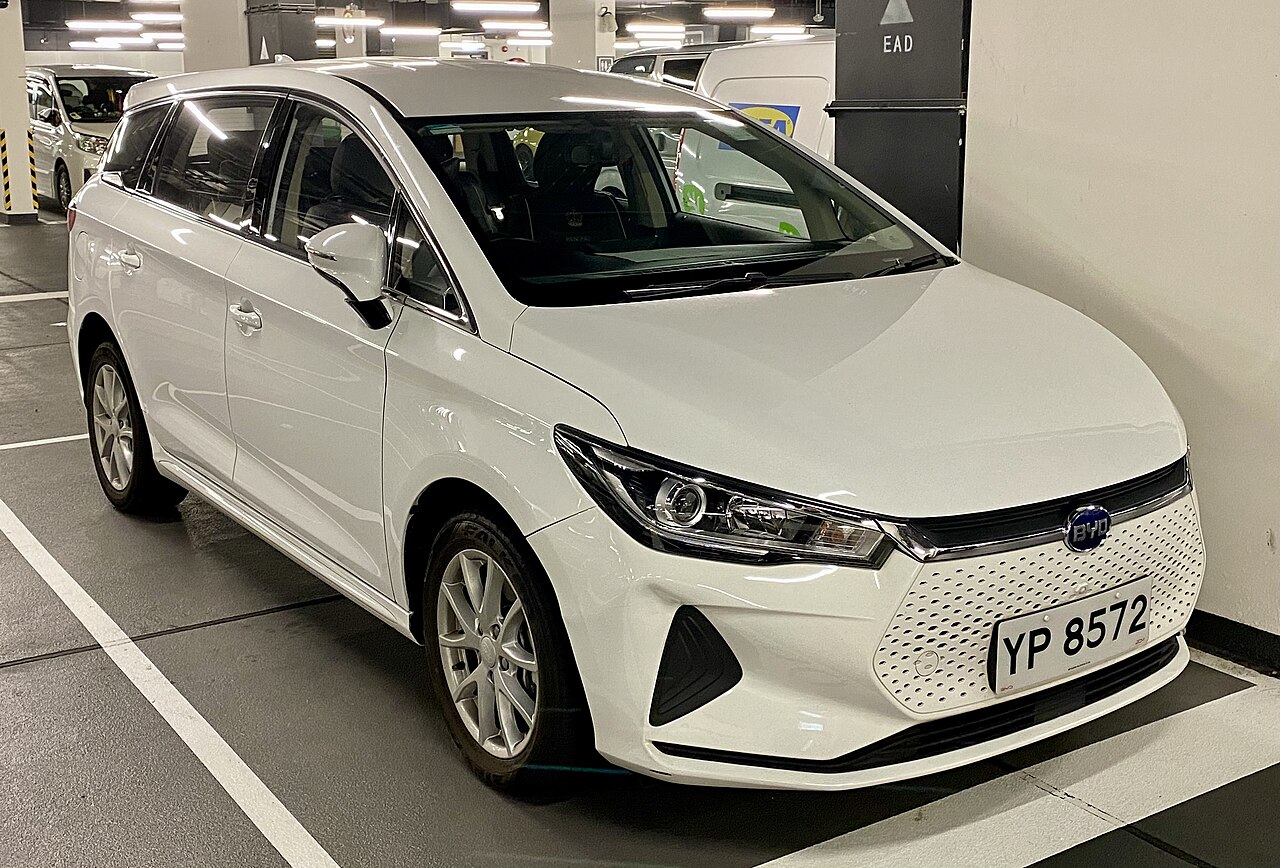
| BYD | 26,103 | +131% |
| Chery Group | 24,332 | +210% |
| SAIC Motor / MG | 21,132 | +32% |
| Leapmotor | 7,628 | +222% |
MG has been the Chinese brand in Europe for most of a decade — a British nameplate, an established dealer base, a car that did not read as an import. It has now been passed by two companies that arrived far more recently, and the growth rates explain why: +32% against +131% and +210%.
Chery's number deserves particular attention, because Chery does not sell under its own name in most of Europe. It sells as Jaecoo and Omoda — brands with no European heritage and no legacy goodwill — and has gone from near-invisibility to second place. Leapmotor's +222%, running through Stellantis's distribution, is the same lesson from the other direction: access to an existing network is worth more than brand equity.
At model level the penetration is now into mainstream territory rather than the margins:
- BYD Seal U — 7,789 units, 21st best-selling car in the EU
- MG ZS — 6,966, 26th
- BYD Atto 2 — 5,603, 43rd
The Geography Is Uneven, and That Matters
Two national figures from Bloomberg tell you where this is actually being won.
- Germany — 6.4%. Below the EU average, in the market with the strongest domestic incumbents and the most protective dealer culture.
- United Kingdom — more than one in five new cars. Outside the EU tariff regime entirely.
The UK number is the tell. Absent the duties, Chinese share is roughly double the EU average. That is a reasonable natural-level estimate for what happens where the tariff does not bind — and a fair indication of where EU share drifts if the PHEV gap stays open.
Germany has apparently drawn the same conclusion. It is reportedly preparing new hybrid tariff proposals for EU consideration, and a limit on Chinese plug-in hybrid exports of around 15% of the EU market is under discussion — against a current level above 33%. That is not an adjustment. It would require cutting Chinese PHEV volume by more than half.
Beijing has already signalled how that lands. Earlier this month China rejected an EU request to cap its own hybrid exports, citing WTO obligations.
Why It Matters
Three things are worth taking away, and only one of them is about China.
First, trade instruments age badly against fast product cycles. The tariff was scoped to the technology that looked decisive in 2024. It took two model years for the answer to become a different technology. Any remedy defined by powertrain rather than by origin or content will keep having this problem.
Second, distribution beat brand. Chery and Leapmotor built share through networks and nameplates European buyers had barely heard of. The thing that scaled was the route to market, not the badge.
Third, the incumbents' hybrid margin is now contested. European manufacturers have leaned on hybrids as the profitable bridge between combustion and electric — the segment funding the transition. It is precisely the segment where Chinese brands now take one sale in four.
What to Watch
- Whether the German PHEV proposal reaches a formal Commission instrument, and how it is scoped. Powertrain-by-powertrain remedies will keep losing this race.
- September and Q4 share. A single record month is a data point; three consecutive ones is a market structure.
- Localisation announcements. Chinese-brand European assembly makes tariffs moot entirely, and is the move that would make this argument permanent.