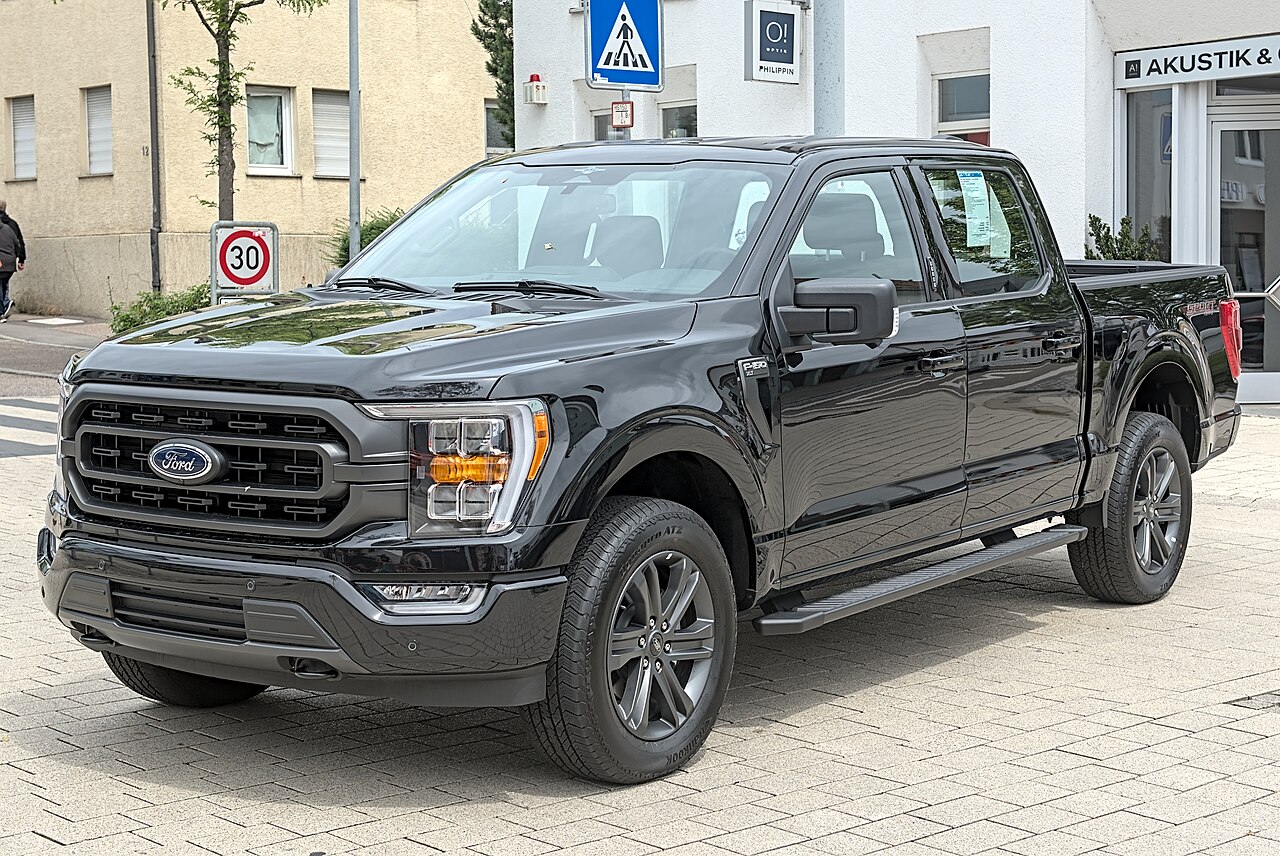
Ford cancelled every production crew at Dearborn Truck Plant from Thursday 24 September through Tuesday 29 September — six days with no F-150s coming off America's most important assembly line. The instruction came in an internal memo obtained by Reuters, which broke the story on 25 September.
Ford has not said what went wrong. The memo cites a supply problem and stops there.
The Interesting Part Is What It Isn't
For most of 2026, every Ford production interruption has had the same explanation: the Novelis fire. The aluminium supplier's plant burned late last year, and the shortfall has cost Ford tens of thousands of vehicles of output since — a number the company has been unusually willing to quantify, precisely because it is someone else's fault.
Reuters reports this stoppage is not that. Something else in the supply chain failed, and Ford is not naming it.
That silence is the signal. A company nine months into a well-documented aluminium crisis has every incentive to attribute a new halt to the same cause — it costs nothing reputationally and the market has already priced it in. Declining to do so means either the problem is embarrassing, or it is not yet understood well enough to describe. Neither is comforting.
The spillover pattern says something too:
- Dearborn Truck Plant — all crews cancelled, Thursday through Tuesday 29 September
- Kansas City Assembly — some shifts cancelled on the same issue
- Kentucky Truck Plant, near Louisville — output increased to claw back volume
Two plants down, one running harder. That is a single-component failure propagating across the truck network, not a plant-specific mechanical fault. When a hood die broke at a stamping facility in May and took Dearborn down, Kansas City kept building. This time it didn't.
Six Days of the Wrong Truck
The F-Series has been America's best-selling vehicle for 44 consecutive years. Dearborn Truck is where the highest-margin volume version of it is made. There is no product in the American industry where a lost day costs more.
And Ford is losing these days from a position it can't afford to.
F-Series inventory closed last quarter at 52 days' supply — below Ford's own 55-to-65-day target, before six days of Dearborn output vanished.
Per Ford Authority, F-Series stock was already at 52 days' supply, against a company target band of 55 to 65 days. Dealers were thin going in. They will be thinner coming out, and the restock has to come from Kentucky overtime rather than the plant that actually builds the mix.
Set that against the demand picture Reuters reported: Ford's total volume is down roughly 10% year-on-year through August, with F-Series off 11%.
The Two Readings
There is a benign interpretation, and Ford is entitled to it. Cutting production into a soft market when inventory is only slightly below target is not obviously a crisis — it is what a disciplined manufacturer does when a part runs short and demand is already cooling. Six days of Dearborn downtime in a year where F-Series sales are down 11% is not the same emergency it would be in a year where they were up 11%.
The less benign reading is that Ford's supply chain has now failed twice in 2026 on unrelated causes — a broken hood die in May, an undisclosed shortage in September — and that the Novelis fire was never the whole story. It was the visible failure in a network with thin redundancy. Remove that excuse and the underlying fragility is still there.
The evidence that would settle it is simple and Ford controls all of it: name the part, name the supplier, and say whether the fix is a week or a quarter.
What To Watch
Three things will tell you which reading was right, and none of them require Ford to comment:
- Does Dearborn restart on Wednesday 30 September? A clean restart means a logistics gap, already closed. A rolling extension into October means a supplier that cannot ramp.
- Does Kansas City stay down longer than Dearborn? If it does, the constrained part is shared across body styles, and the exposure is wider than one plant.
- Where does F-Series day supply sit at quarter-end? Ford reports Q3 US sales in early October. A number well under 52 days, with Kentucky running hot, tells you the network could not absorb six days.
Why it matters: the F-Series is the single largest profit pool in North American manufacturing, and its production schedule is a live readout on whether the industry's post-fire supply chain has actually been repaired or merely patched. This week suggests patched. Ford's silence on the cause is doing more to support that reading than any figure in the memo.
Passion4Drive has not independently reviewed the internal memo; the memo's contents are reported here as sourced to Reuters. Ford's position remains that it does not comment on day-to-day operations.