Geely is taking 30% of NIO Power, the battery-swapping and charging arm that has been NIO's most expensive and most distinctive asset for a decade. The unit is valued at roughly RMB16 billion (US$2.4 billion) post-money.
The headline number to read is not the valuation. It is the RMB640 million (US$94 million) of actual cash changing hands.
Geely is paying for most of its stake in assets, not money: 100% of the equity in Yiyi Power, its commercial-fleet battery-swap operator, which Electrek values at approximately RMB4.1 billion (US$610 million). Cash is roughly an eighth of the consideration.
The Structure
After closing — the company says the deal is still subject to regulatory approvals and customary closing conditions — NIO Power's register looks like this:
| Holder | Stake |
|---|---|
| NIO China | 63.6% |
| Geely | 30.0% |
| Wuhan Guangchuang | 6.4% |
There is a reciprocal leg: NIO takes 10% of Zhejiang Haohan Energy Technology, Geely's charging business, in exchange for charging-network assets of its own. So this is not a straight sale. It is two infrastructure businesses swapping minority positions in each other.
Electrek additionally reports a milestone-linked adjustment — Geely's holding can ratchet down to a 20% floor if Yiyi underperforms, and Geely holds an option to put in another RMB640 million within two years to reach 34%. That detail has not appeared in the other accounts, so treat it as single-sourced; the direction of travel it implies, though, is clear enough.
Why NIO Did It
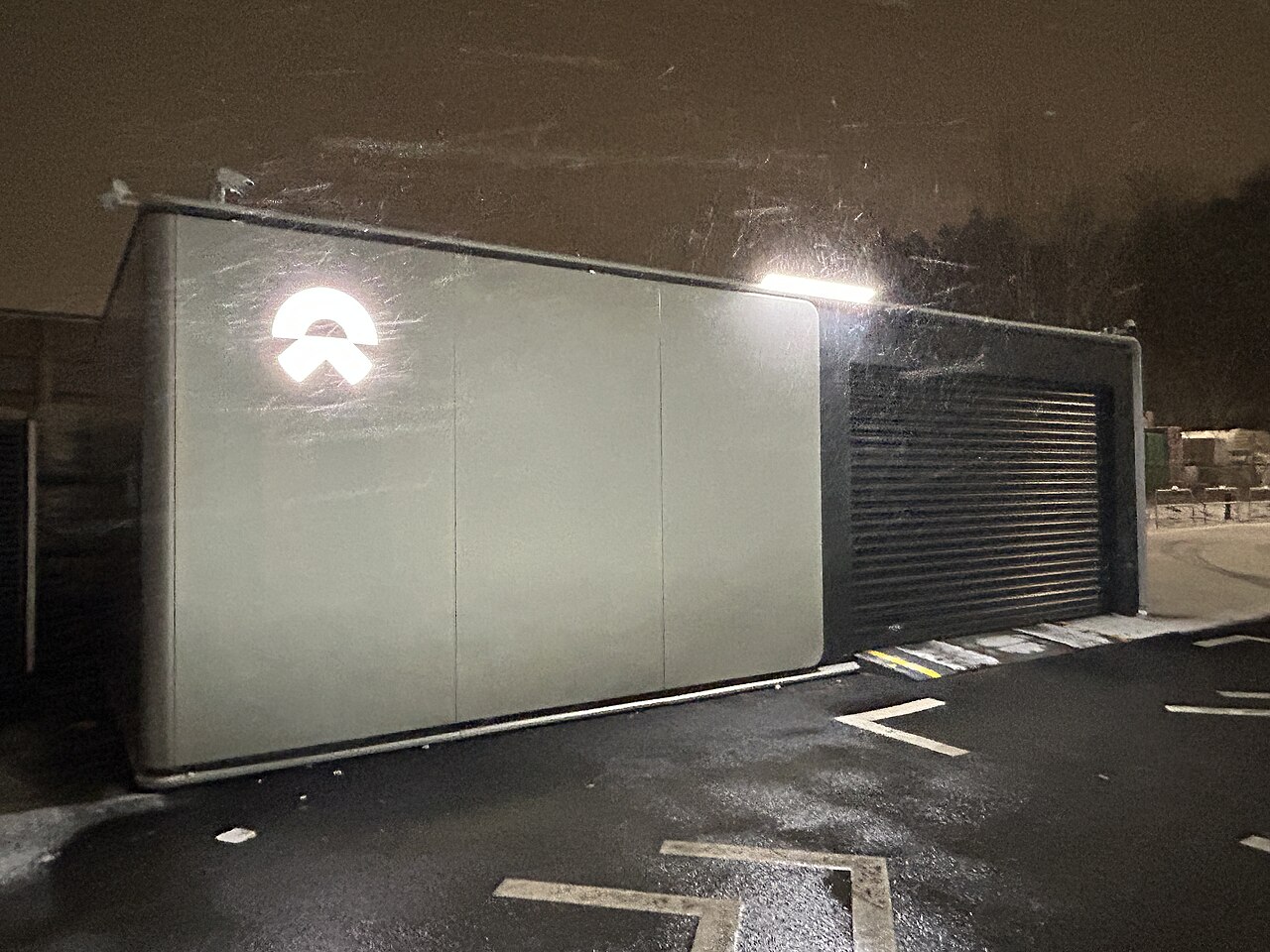
NIO's problem has never been the technology. 3,790 swap stations as of February 2026, 100 million cumulative swaps passed that same month, a single-day record of 175,976 swaps — nobody else in the world operates a swap network at this scale.
The problem has always been that NIO has been paying for it almost alone.
The Q2 2026 numbers explain the timing precisely. NIO delivered 107,658 vehicles at an 18.5% vehicle margin and held RMB56.7 billion in cash at the end of June — respectable, and it turned a small non-GAAP profit against an RMB528 million GAAP loss. That is a company that has stopped bleeding but has not started generating the kind of surplus that funds 10,000 stations by 2030 out of operating cash flow.
Previous outside money into NIO Power was thin: RMB1.5 billion from Wuhan Guangchuang in May 2024, and CATL discussions capped at RMB2.5 billion whose status is now unclear. This is the first time a major outside party has committed operating assets rather than a cheque.
A cheque funds the next hundred stations. A competitor's fleet-swapping business, folded in, funds the next thousand — because it arrives with utilisation already attached.
Why Geely Did It
Geely is not buying an investment. It is buying its way out of building one.
Read the two companies' stated targets side by side and the logic is obvious:
- NIO Power by 2030: 10,000 swap stations, annual electricity demand above 10 billion kWh.
- Geely by end-2027: 22,000+ charging stations, 100,000+ charging connectors, 15,000+ smart charging stations, 50,000+ smart connectors.
Geely has gone extremely long on charging. It has not built a consumer swap network, and the deal commits it to developing battery-swappable consumer models that NIO Power will service. Rather than duplicate a decade of standards work, capital and site acquisition, Geely is buying 30% of the network that already exists and contributing the commercial-fleet piece it does have.
The two groups already signed a battery-swap standards and network-sharing agreement on 29 November 2023. This converts that memorandum into equity.
The Standard Is the Real Prize
The line in the announcement that matters most commercially is the dullest: the partners will jointly develop unified battery-swap technologies and standards for the consumer market.
Swapping only works at scale if the pack is common. For ten years NIO's swap network has been a NIO-only moat — brilliant differentiation, terrible economics, because every station's utilisation is capped by one brand's sales. Geely is China's largest domestic group by volume across its brands. A swap standard shared between NIO and Geely is no longer a proprietary feature. It is a candidate national standard, and in China a candidate national standard is frequently what a national standard becomes.
That reframes the whole asset. NIO Power stops being a cost centre defending NIO's product story and starts being infrastructure with more than one customer — which is the only version of it that was ever going to be worth RMB16 billion.
What to Read Carefully
Three things are not settled:
- Governance. Neither the company statement nor CnEVPost's reporting discloses board representation or decision rights. A 30% holder contributing an operating subsidiary usually wants more than economics, and who controls the standard-setting roadmap is the entire question.
- Regulatory approval. The transaction is explicitly conditional. Two of China's larger auto groups jointly standardising charging-adjacent infrastructure is not a transaction that closes unexamined.
- CATL. Talks capped at RMB2.5 billion are now of uncertain status. CATL has its own swap ambitions and is the world's largest cell maker. Its response is the thing to watch next, not NIO's.
For anyone reading this from a capital-allocation seat: the transferable lesson is not about swapping. It is that a decade-long infrastructure moat was monetised not by selling access to it, but by selling a minority of the asset to the one competitor whose volume makes the asset worth more. NIO gave up 30% and made the remaining 63.6% considerably more defensible.