A tyre can have visible grooves and still need attention. A useful home check looks at wear, damage and age together. It complements the cold tyre-pressure check; it does not replace it or certify a tyre safe.
Start with a monthly look
NHTSA recommends checking tread monthly alongside pressure. Park securely on a level surface away from traffic, switch off the vehicle and inspect only what you can reach safely. Do not crawl beneath a vehicle or lift it just to follow this checklist. If a section is inaccessible, ask a tyre professional to inspect it.
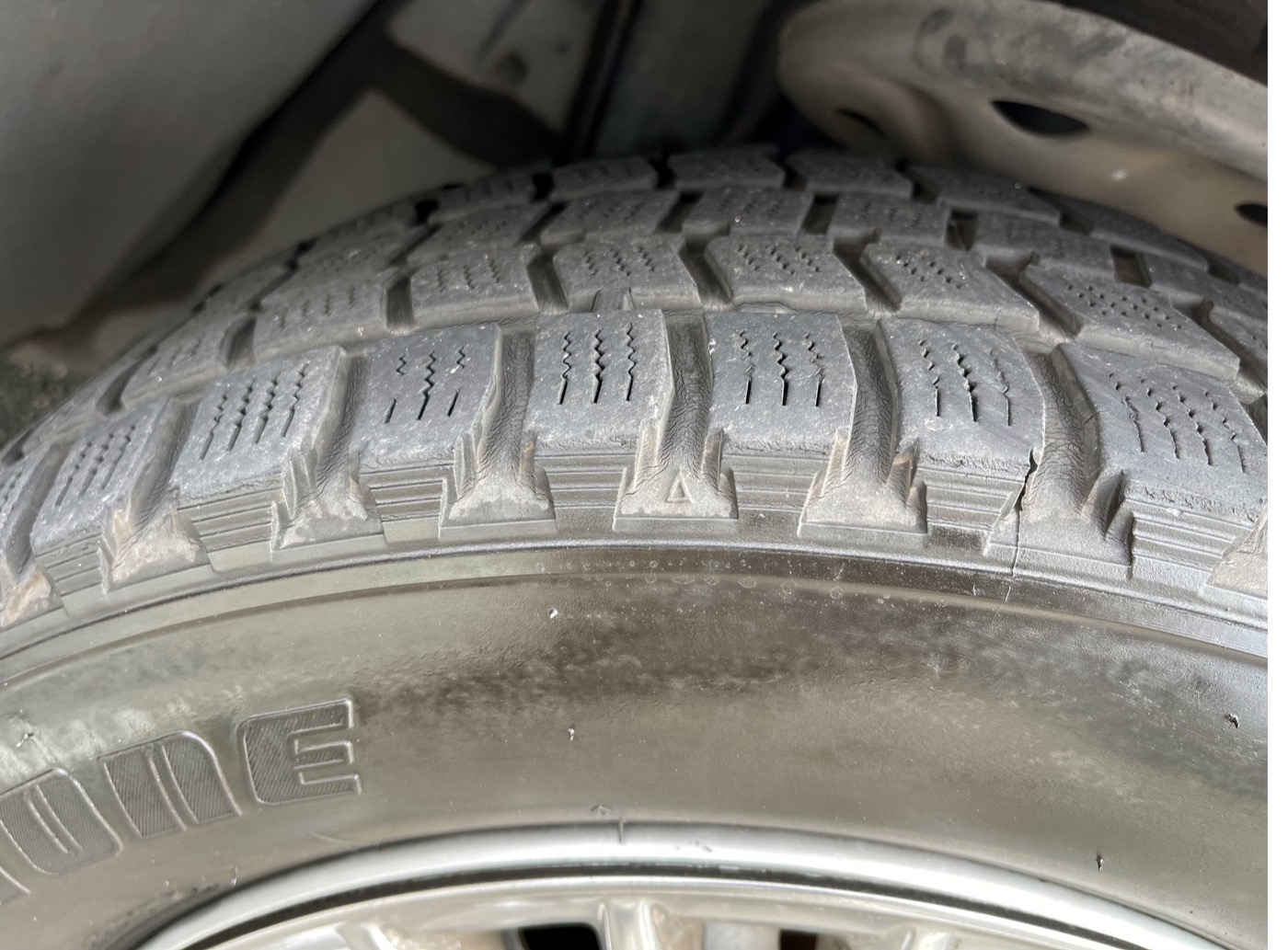
Look for the raised bars inside the tread grooves. NHTSA says tyres should be replaced when the surrounding tread has worn level with those indicators. Its guidance identifies 2/32 inch, approximately 1.6 mm, as the replacement threshold.
That figure is not a worldwide legal statement or a guarantee of grip above it. Check the requirements for your location and tyre type, especially for winter use. A small shoulder symbol may identify where an indicator is located; it is not itself a tread-depth reading.
Check condition as well as depth
Michelin’s replacement guidance identifies cuts, cracks and bulges as signs requiring attention. Visible sidewall damage needs immediate professional inspection. New vibration, pulling or reduced grip can also call for inspection even when the tread appears deep enough.
Do not keep using a tyre with a bulge, exposed cords or obvious structural damage while waiting for a routine service. Arrange roadside assistance or professional advice about moving the vehicle safely. A home photograph cannot establish whether internal damage is present.
Record age without turning it into a guarantee
For tyres carrying a DOT date code, the final four digits identify the manufacturing week and year. For example, 2322 means week 23 of 2022, not an expiry date.
Michelin recommends annual professional inspections after five years of use and precautionary replacement at ten years from manufacture, including spare tyres. Follow any earlier vehicle- or tyre-manufacturer limit. Ten years is not permission to keep a damaged or worn tyre in service.
Keep a useful inspection note
Make one entry for each wheel position: front left, front right, rear left and rear right. Add the date, visible wear, any measured depth with its units, damage noticed and the action arranged. Record the spare separately.
Example: “Front left — uneven shoulder wear noticed; inspection booked.” That is more useful than “tyres look okay” because it tells the technician where to start. Ask the technician to explain the cause and recommended action rather than assuming that every uneven pattern has the same explanation.
Keep the latest inspection note with your maintenance records. The purpose is to notice a change early and get it assessed, not to stretch the tyre’s use until every possible limit is reached.