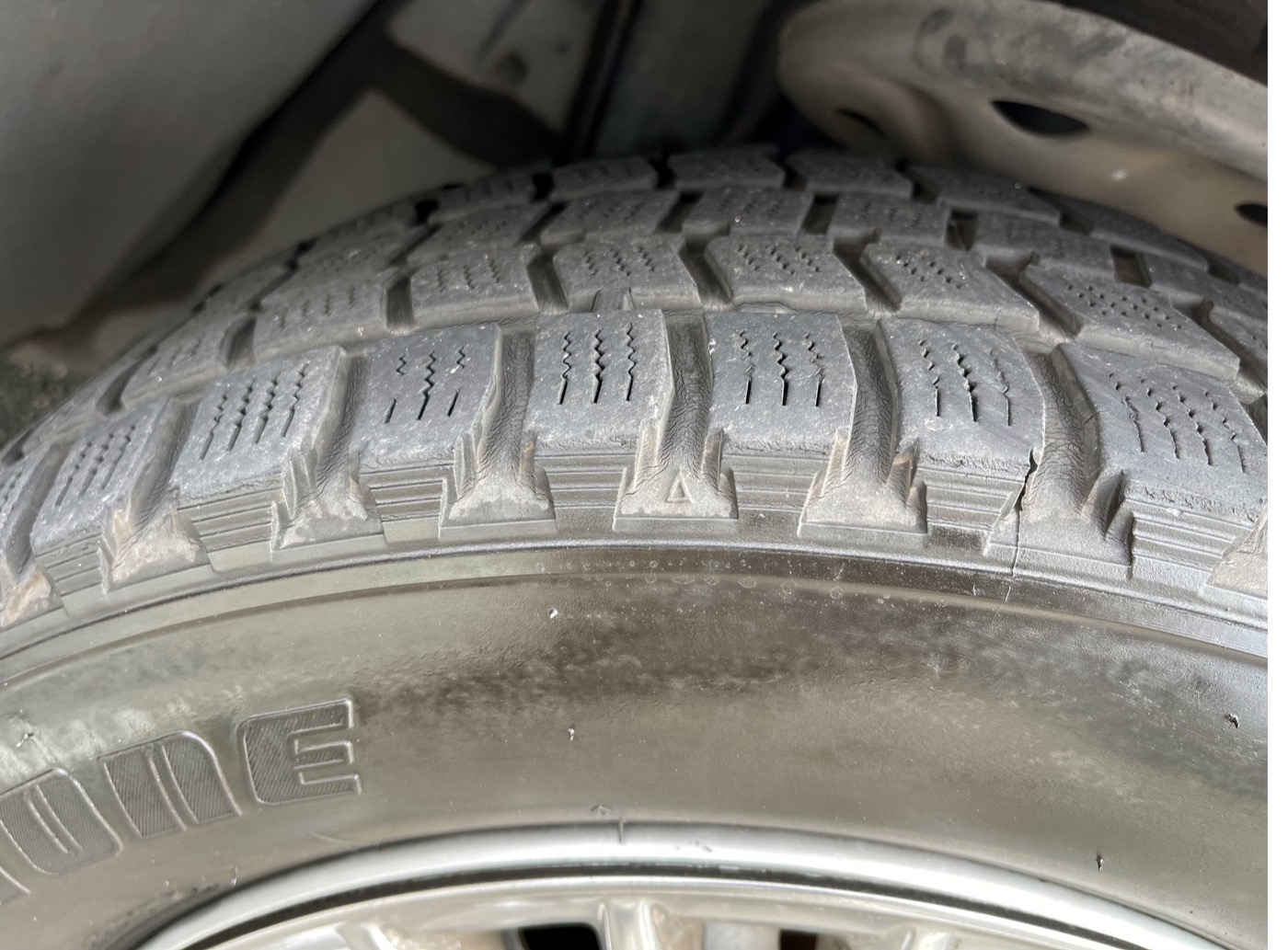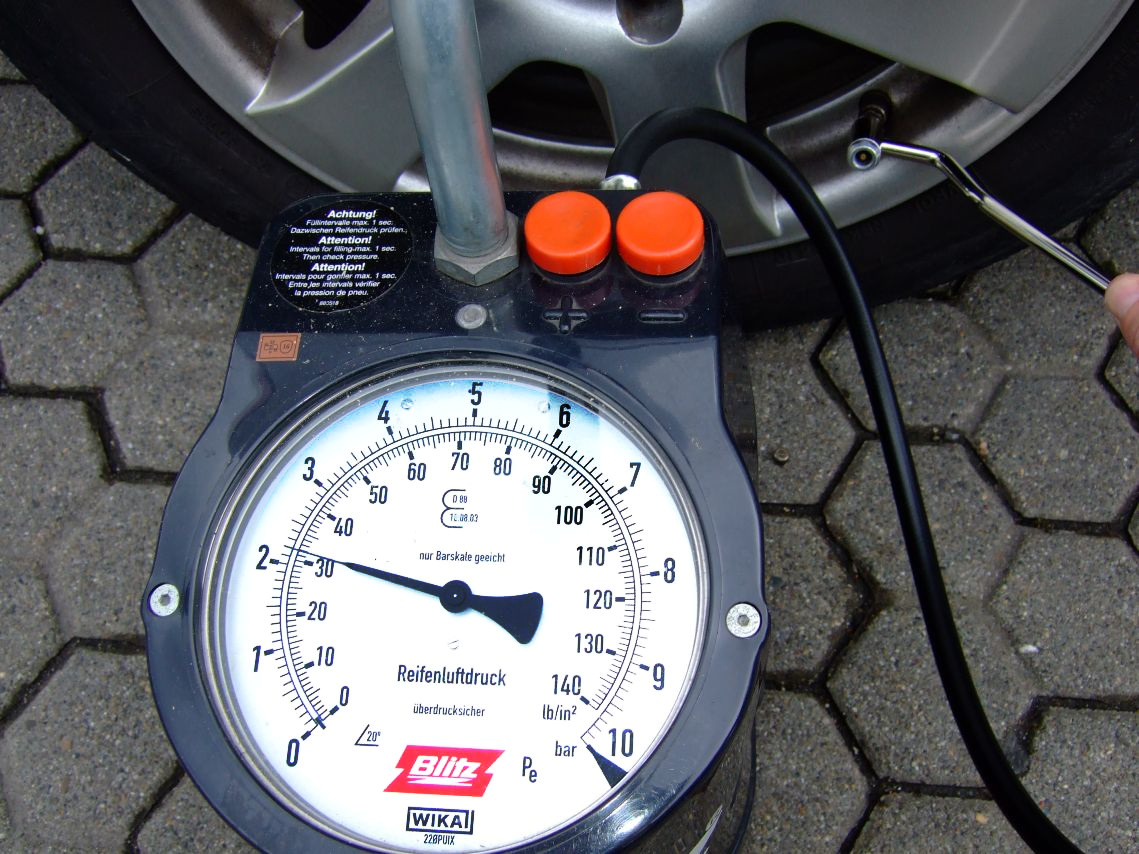
The useful number for a routine tyre-pressure check is the pressure specified for your vehicle, not a number copied from another driver’s car. Start with the vehicle’s inflation label and owner’s manual, then measure with a gauge under the specified conditions.
This guide covers ordinary road-car maintenance. It is not a track-pressure setup or a replacement for instructions specific to your vehicle.
Find the correct target
Michelin’s guidance directs drivers to the vehicle sticker or owner’s manual rather than the tyre sidewall. Check which front and rear values apply. NHTSA notes that some cars specify different pressures for the two axles.
Keep the pressure units consistent: a reading in psi cannot be compared directly with a target written in kPa or bar. Select the matching unit on your gauge before comparing numbers. Do not treat an example displayed in an online article as your car’s target.
Make the check repeatable
Michelin recommends checking before driving or after the car has stood for at least three hours. Its routine calls for a gauge, a reading at the valve and comparison with the vehicle’s recommended pressure. Follow the gauge instructions and adjust cold readings to the correct target; a tyre retailer can help if needed.
NHTSA recommends monthly checks, including the spare where fitted. If you are comparing readings over time, record them under comparable conditions.
A simple note can contain four entries: wheel position, target pressure, measured pressure and date. Add the unit beside each number. This makes it easier to explain a recurring discrepancy to a workshop without relying on memory.
A dashboard warning is not a maintenance schedule
NHTSA explains that tyre-pressure monitoring systems warn of significant underinflation; regular checks are still needed. It advises inspection and a pressure check when the warning appears. Repeated pressure loss, unusual noise or vibration warrants attention from a tyre professional.
Our practical suggestion is to keep the gauge with your other vehicle essentials and add the check to a regular calendar reminder. Recording the readings is more useful than simply ticking a box marked “tyres checked.”
For more research-based maintenance coverage, visit our ownership section. This article draws on manufacturer and regulator guidance; it does not claim a hands-on product test.