Six hours of racing at the Circuit of the Americas ended the way modern endurance racing increasingly ends: not with an overtake, but with a component failure.
With roughly twelve minutes left in the 2026 Lone Star Le Mans on 6 September, Nyck de Vries was leading in the No. 7 Toyota GR010 Hybrid he shares with Mike Conway and Kamui Kobayashi. Toyota had never won at COTA. It was about to. Then hydraulic pressure collapsed, the car slowed, and a race Toyota had controlled through the closing stint simply evaporated.
The No. 50 AF Corse Ferrari 499P of Nicklas Nielsen, Miguel Molina and Antonio Fuoco inherited the lead and took the chequered flag 4.471 seconds clear. It is a legitimate win — Ferrari was in position to take it, which is most of the job in a six-hour race — but nobody in the paddock is pretending it was won purely on outright pace.
That is the point. And it is the most revealing thing about top-tier sportscar racing in 2026.
The Dead Heat That Explained Everything
If you want a single data point that describes the current LMDh/LMH era, it happened in Hyperpole qualifying, not in the race itself.
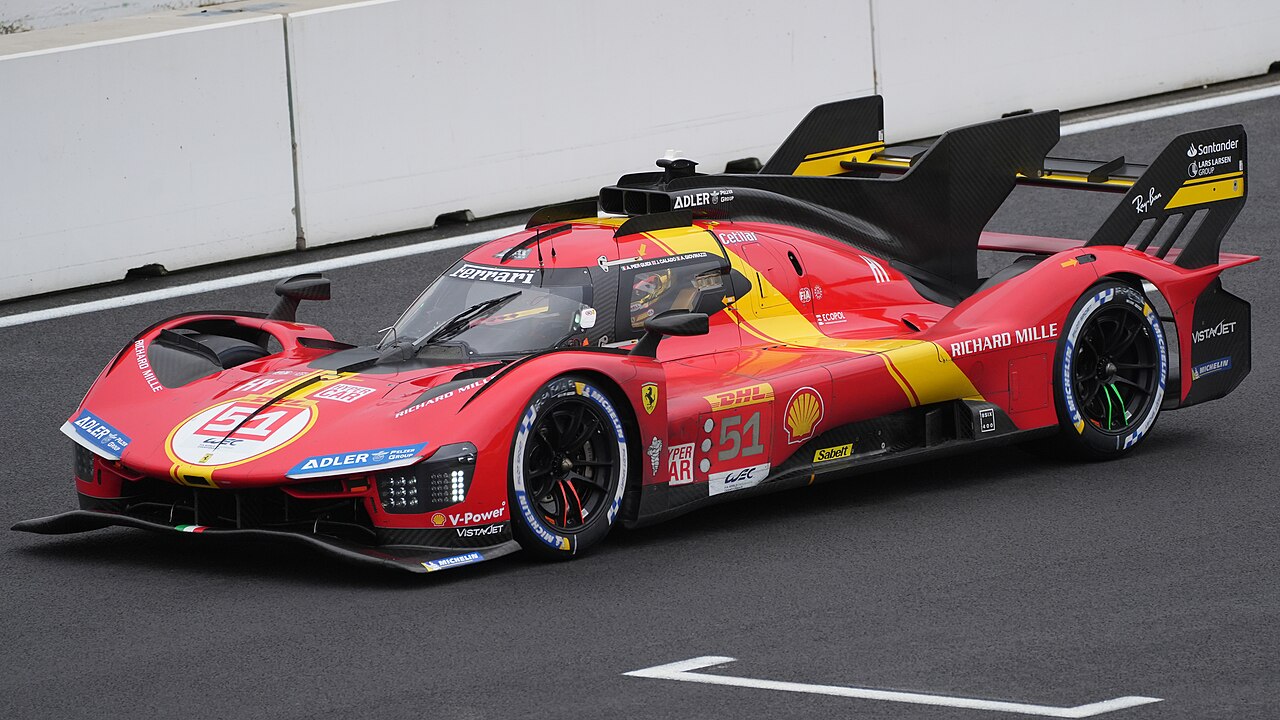
Antonio Giovinazzi put the No. 51 Ferrari on pole with a 1:52.445. Jack Aitken, in the No. 38 Hertz Team JOTA Cadillac, set exactly the same time — 1:52.445, to the thousandth of a second. Giovinazzi kept pole only because he set the benchmark lap first. It was only the second dead heat in FIA WEC history and the first under the current single-lap Hyperpole format.
Behind them, Charles Milesi's Alpine A424 was 0.029s back and Harry Tincknell's Heart of Racing Aston Martin Valkyrie was 0.050s back. Four manufacturers, four completely different engineering philosophies — a twin-turbo V6 hybrid Ferrari, a naturally aspirated V8 Cadillac LMDh, a single-turbo V6 Alpine, and a screaming naturally aspirated V12 Aston Martin — covered by just five hundredths of a second. It is the closest top four in Hyperpole history.
You can debate Balance of Performance until the Wi-Fi dies. What is not arguable is the outcome: performance convergence in the top class of sportscar racing is now essentially complete. Nobody has an overwhelming lap-time advantage.
And when nobody has a pure speed advantage, the differentiators move somewhere else — to strategy calls, traffic management in multi-class traffic, pit stop execution, and, above all, whether the car finishes.
How the Race Actually Unfolded
The start was wet enough to demand two extra formation laps before the field was released. From there it settled into the grinding pattern that Austin always produces: long stints in high ambient heat, a massive amount of LMGT3 traffic through the high-speed esses, and a four-way strategic battle between Ferrari, Toyota, Cadillac and Alpine.
Ferrari's day was far from clean. André Lotterer's No. 17 Genesis made contact with a Ferrari early on, spinning and dropping down the order in the process. The No. 51 that started on pole was never the Ferrari that mattered. The No. 50 was, because it stayed relentlessly out of trouble.
Toyota's No. 7 emerged from the final round of pit stops in front and looked in complete command. Twelve minutes from the end, the hydraulics gave out.
Behind the winning Ferrari, the No. 38 Cadillac of Aitken, Earl Bamber and Sébastien Bourdais took a well-earned second. Alpine's No. 35 A424 — António Félix da Costa, Charles Milesi and Ferdinand Habsburg — crossed the line second on the road but was demoted to third by a five-second penalty for an unsafe pit release.
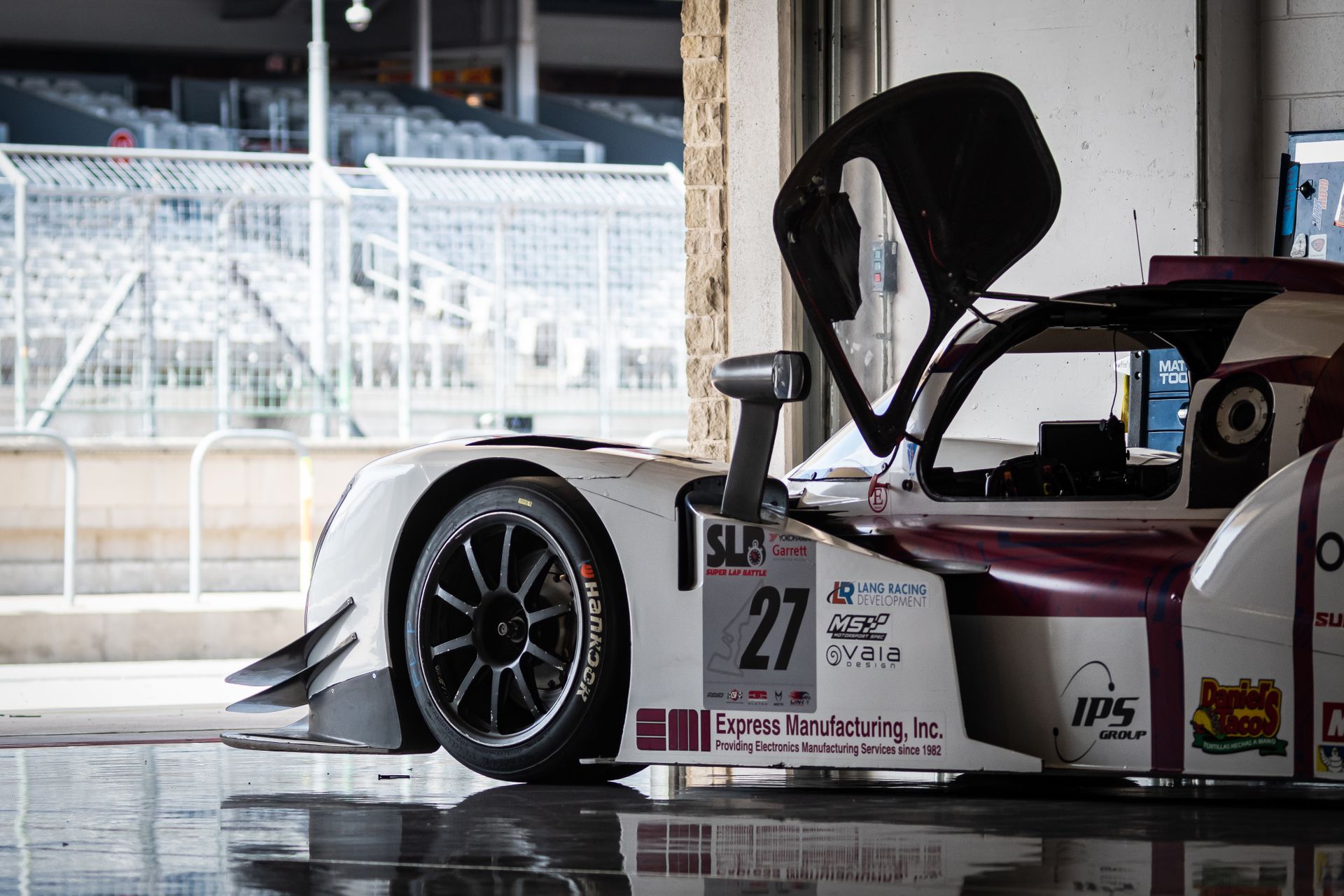
In LMGT3, Heart of Racing's No. 27 Aston Martin Vantage GT3 Evo of Ian James, Zach Robichon and Mattia Drudi won by around five seconds from the No. 91 Manthey Porsche — the team's first LMGT3 victory in two years.
Why This Scrambles the Title Fight
Here is where COTA gets genuinely consequential for the remainder of the 2026 season.
Toyota still leads the Hypercar manufacturers' championship, with BMW sitting second. But neither scored meaningfully in Austin — Toyota's No. 7 and No. 20 came away empty-handed — and Ferrari is now 26 points off Toyota and 17 off BMW with three rounds to run. Cadillac sits on 80 points, while Alpine holds a 14-point cushion over Aston Martin.
The No. 50 crew's victory lifts them to 54 points in the drivers' standings, level with Kevin Magnussen and Raffaele Marciello.
| Pos | Car | Team | Drivers |
|---|---|---|---|
| 1 | No. 50 Ferrari 499P | AF Corse | Nielsen / Molina / Fuoco |
| 2 | No. 38 Cadillac V-Series.R | Hertz Team JOTA | Aitken / Bamber / Bourdais |
| 3 | No. 35 Alpine A424 | Alpine Endurance Team | da Costa / Milesi / Habsburg |
| LMGT3 | No. 27 Aston Martin Vantage GT3 Evo | Heart of Racing | James / Robichon / Drudi |
Three rounds remain. A points deficit that a single reliability failure can erase is not a championship being won on raw qualifying pace — it is a championship being won on component resilience.
The Engineering Reality
There is a version of this story that reads as anticlimax: Ferrari only won because Toyota broke.
There is a better version. In a class where four manufacturers can qualify within five hundredths, reliability is performance. It is the only remaining axis on which a team can build a real advantage, because it is the one thing BoP cannot equalise. Toyota did not lose a race at COTA; it lost a component it had validated over thousands of simulated hours — and that failure is an engineering problem just as decisive as lap time.
The romantic reading of endurance racing has always been that it rewards the team that survives. Convergence has quietly handed that truth back to the sport.