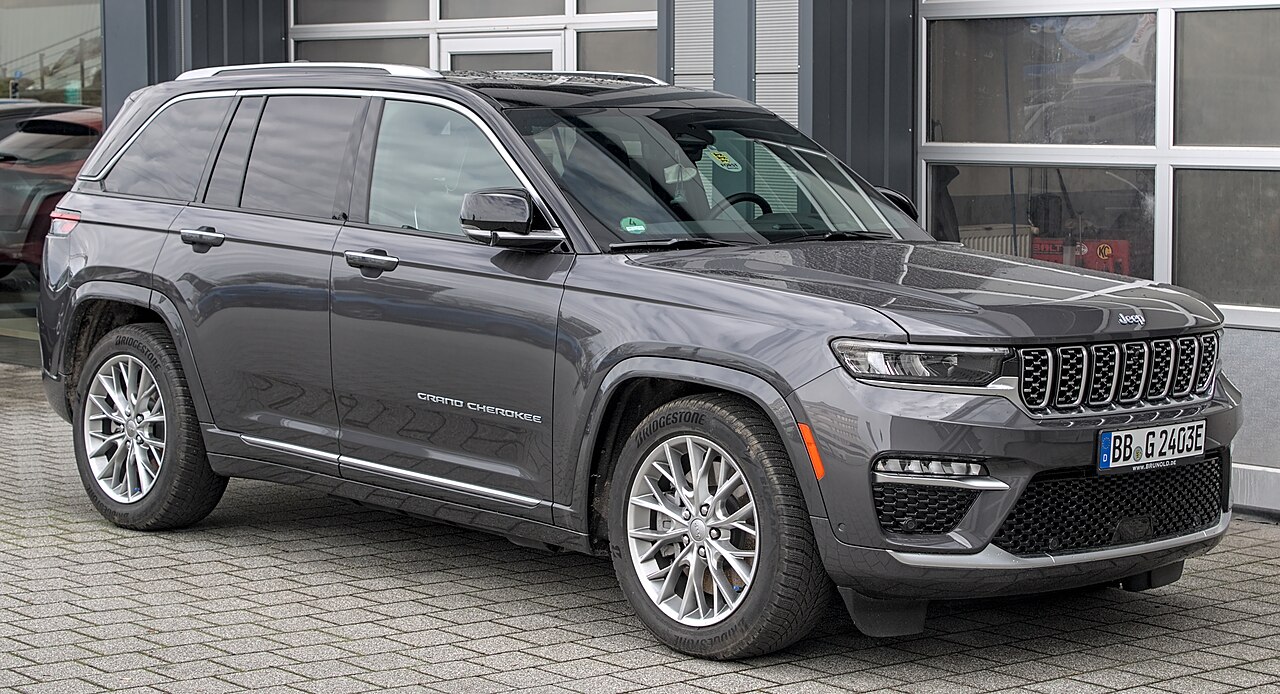
The National Highway Traffic Safety Administration closed its investigation into Jeep fires on Monday 29 September. It did not issue a defect finding. It did not need to.
By the time the docket closed, Stellantis had already recalled 1,076,999 US-market vehicles — every 2021-2025 Jeep Wrangler and Jeep Gladiator — for the exact failure the agency had been looking at.
That is how most of these end. Not with a finding, but with a recall large enough to make the finding redundant.
What the Probe Was Actually Looking At
NHTSA opened Preliminary Evaluation PE24024-19581 on 9 September 2024. The trigger was small: nine owner complaints, one of which involved an injury. The scope was not — more than 781,000 model-year 2021-2023 Wranglers and Gladiators.
The pattern in those nine complaints is what made them worth a docket. The fires were starting in the passenger-side engine compartment. Several started with the ignition off.
That second detail is the one that moves a complaint from a warranty problem to a safety investigation. A vehicle that can catch fire while parked is a hazard to whatever it is parked next to, and to whoever is asleep upstairs. NHTSA said as much in its opening resume: engine fires with the ignition off "can result in an increased risk of occupant injury, injury to persons outside the vehicle, and property damage."
In its correspondence with the agency, Stellantis pointed at a specific component. Several of the thermal events, the company said, had originated at a power steering pump electrical connector.
The Defect, in the Language of the Filing
When the recall landed in June, the filed defect description was unusually precise about where in the manufacturing process this went wrong.
The EHPSP header — the electrical header on the electric hydraulic power steering pump — had been "manufactured outside of specified tolerances, which can result in insertion forces above specification." A connector that requires more force than specified to seat may not seat fully. A connector that is not fully seated carries high resistance. High resistance generates heat. Heat next to combustible material, over enough duty cycles, is a fire.
A tolerance problem on one plastic header became 1,076,999 recalled vehicles. The defect is millimetres wide; the population is a million cars.
The recall was filed as NHTSA campaign 26V363, Stellantis internal code 21D, and it splits as:
- 787,887 Jeep Wranglers, built 24 June 2020 to 2 December 2024
- 289,112 Jeep Gladiators, built 18 August 2020 to 2 December 2024
Stellantis issued its public statement on 9 June 2026. The remedy is a free dealer inspection, repair or replacement of the affected connection — with the wiring harness and/or the pump itself replaced where required. The company said at the time it anticipated a solution no later than July 2026, and owner letters went out in a phased window between 9 July and 3 August 2026.
The Instruction That Tells You the Severity
Both the company and the regulator told owners the same thing, and it is the tell.
Stellantis advised owners to park away from structures or other vehicles until the remedy was obtained. NHTSA's version was blunter: park outside, away from other vehicles and buildings.
Automakers do not issue park-outside advisories lightly. It is an admission that the failure can occur unattended and that the interval between recall notice and repair is a period of real exposure. For a population of over a million vehicles, phased owner letters, and a remedy that requires a dealer visit, that interval is measured in months.
Worth noting what the numbers did not say. As of 18 May 2026, the filing recorded one injury and no documented accidents. This was not a body count. It was a mechanism that had produced enough thermal events to be predictable, caught before it produced a fatality.
Why the Closure Is the Story, Not the Anticlimax
There is a reading of this that says the regulator achieved nothing — it looked for two years and then filed the case away.
That reading misses how the enforcement mechanism actually works. A Preliminary Evaluation is not a prosecution. It is a lever. The agency's leverage is the credible prospect of an escalation to an Engineering Analysis, and after that a formal defect determination and an influenced recall that the manufacturer does not get to scope itself.
What the lever produced here is instructive:
- The probe covered 781,500 vehicles and three model years
- The recall covers 1,076,999 vehicles and five model years
- The recall also swept in 106,258 vehicles in Canada, 23,704 in Mexico and 124,297 outside North America
Stellantis recalled a larger population than the one under investigation, and extended it to markets where no US regulator has jurisdiction. That is the outcome an open docket is designed to produce, and it arrived faster than a defect determination would have.
The cost of that, from a regulatory-accountability standpoint, is that the public record now contains no finding. There is a closing resume and a recall, but no agency statement that Stellantis built a defective part. For plaintiffs' lawyers, for the next buyer of a 2023 Wrangler, and for anyone tracking whether this supplier's tolerances have been fixed rather than worked around, that absence is not nothing.
Why It Matters
For the Wrangler, this is a bad number attached to a good franchise. Jeep's most identity-defining product just had five consecutive model years recalled in a single campaign, in a US market where Stellantis is already fighting for share and where the brand's pricing power has been under pressure.
For the industry, the more transferable lesson is about where the risk now lives. The failure here was not in a novel technology. It was in a connector on an electrified steering pump — a component that exists because the steering system moved off the engine belt and onto the electrical architecture. As more of the car migrates onto that architecture, more of the safety surface becomes connectors, headers and insertion forces. Those are supplier-tolerance problems, they are invisible in road testing, and they scale to a million vehicles before anyone notices.
Nine complaints found this one.